
How to optimize sales outreach in 2026 for tech leaders
Sales leaders across Europe face a growing challenge: traditional outreach methods no longer work. Buyer expectations have shifted, cultural nuances demand respect, and AI tools are reshaping how teams connect with prospects. Generic, scalable approaches fail in markets like DACH, where relevance is earned through context and restraint. This guide delivers actionable strategies to optimize your sales outreach in 2026, blending technology with cultural intelligence to drive predictable pipeline growth and higher conversion rates.
| Point | Details |
|---|---|
| AI-driven outreach boosts pipeline | AI agents can generate 25% of new pipeline in 90 days when properly implemented. |
| Cultural nuance is critical in DACH | German decision-makers demand clear answers to why me, why now, why this topic. |
| Traditional sales roles are evolving | Sales Engineers and Solutions Architects increasingly lead large deal closures in tech. |
| Focus on concrete impact | Abstract benefits fail; specific, measurable outcomes drive engagement in European markets. |
| Curate revenue-driving tools | Most sales software does not impact revenue; prioritize tools that convert leads. |
Outbound outreach strategies that worked in North America often collapse when applied to European markets, especially in the DACH region. The core issue is cultural collision. Scalable outbound stopped working because it conflicts with DACH business culture, where professional respect and context matter more than volume.
German decision-makers operate differently than their American counterparts. They expect clear, concrete justification for every interaction. Why should they care about your message? Why now? Why is this topic relevant to their specific situation? Generic templates that rely on job titles or industry assumptions fail immediately. Cold outreach in Germany works only when it feels like professional relevance, not marketing.
Relevance in DACH markets is not assumed. You cannot infer it from a prospect’s title or company size. You earn it through preparation, context, and restraint. Sending 500 identical emails to VPs of Sales across Germany will not generate pipeline. It will trigger spam filters and damage your sender reputation.
Consider these common failures:
The shift to remote work and digital-first interactions has raised buyer expectations. Decision-makers receive hundreds of outreach attempts monthly. They have developed sophisticated filters for irrelevance. Your message must pass a simple test: does this person understand my business well enough to deserve my attention?
Traditional spray-and-pray tactics also clash with GDPR regulations and European privacy norms. Buyers in the EU expect transparency about how you obtained their contact information and why you believe your solution fits their needs. Failing to address these expectations creates friction before the conversation even starts.
For tech sales leaders, this means rethinking outreach from the ground up. You need strategies that respect cultural context, deliver genuine relevance, and leverage technology without sacrificing authenticity. The selling in Germany tips podcast episode explores these dynamics in depth, offering practical insights from successful DACH market campaigns.
Before launching outreach campaigns, you must build a foundation that prioritizes impact over activity. This starts with your sales tech stack. The average B2B company uses a large number of software tools, but only a small percentage directly impact revenue generation. Most tools create busywork without improving conversion rates.
Audit your current stack ruthlessly. Which tools actually help you close deals? Which ones just generate reports that no one acts on? Focus on three categories: prospecting tools that identify high-fit accounts, communication platforms that enable personalized outreach at scale, and analytics systems that track revenue impact, not vanity metrics.
Next, develop buyer personas that go beyond demographics. In European markets, especially DACH, understanding cultural and professional context matters more than knowing someone’s job title. Ask yourself:
In DACH markets, relevance is not inferred from job titles or industries. It is earned through context, preparation, and restraint. This means researching each prospect’s company, recent initiatives, and specific pain points before crafting your message.
Create messaging frameworks that answer the three critical questions German decision-makers ask: why me, why now, why this topic? Your outreach must demonstrate specific understanding of their situation. Generic benefits like “increase efficiency” or “drive growth” mean nothing without concrete context.
Here is a simple preparation checklist:
| Preparation Element | Traditional Approach | Optimized Approach |
|---|---|---|
| Tech Stack | 15 to 20 tools, most unused | 3 to 5 revenue-driving tools |
| Buyer Research | Job title and industry | Cultural context and specific challenges |
| Messaging | Generic value propositions | Concrete, contextualized relevance |
| Metrics | Activity-based (emails sent) | Outcome-based (pipeline generated) |
Pro Tip: Use data to validate your assumptions about what works. Track which messages generate responses, which accounts convert to opportunities, and which tools actually contribute to closed deals. Let evidence guide your strategy, not gut feelings or vendor promises.
Understanding B2B sales methodology helps you structure your preparation around proven frameworks. Similarly, exploring how AI is reshaping sales tech reveals which capabilities matter most for modern outreach.
With preparation complete, execution becomes a matter of blending AI capabilities with cultural intelligence. By 2026, a significant percentage of sales tech vendors will ship generative AI features natively, making AI-assisted outreach accessible to teams of all sizes.

The key is using AI to enhance personalization, not replace human judgment. AI excels at analyzing prospect data, identifying relevance triggers, and drafting initial message frameworks. Humans excel at adding cultural nuance, authentic voice, and strategic context. Combine both for maximum impact.
Follow this stepwise approach:
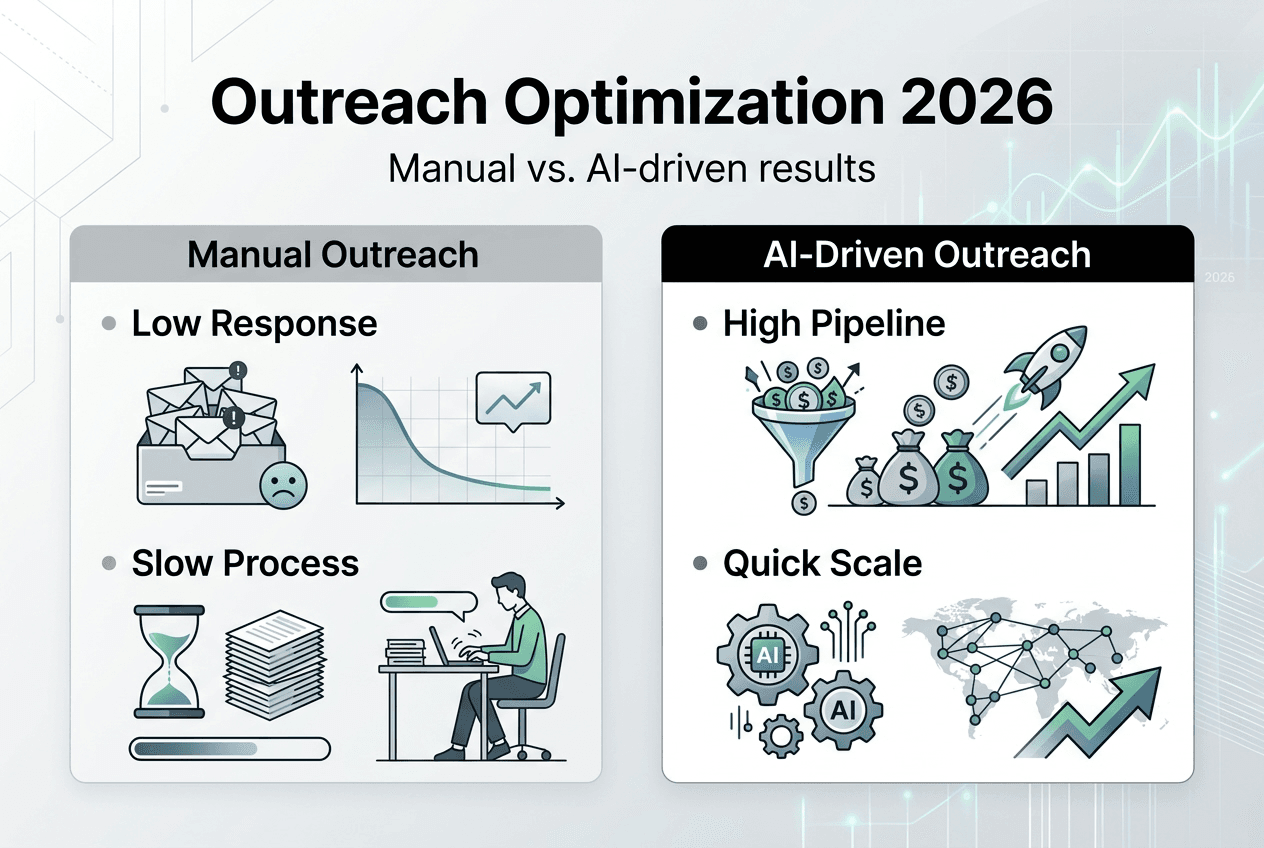
The results speak for themselves. One AI agent generated 25% of new pipeline in 90 days, demonstrating the power of properly implemented AI outreach. However, this success required human oversight to avoid faux familiarity and maintain professional tone.
| Approach | Response Rate | Pipeline Contribution | Scalability |
|---|---|---|---|
| Manual Outreach | 8 to 12% | High quality, low volume | Limited |
| Automated Templates | 1 to 3% | Low quality, high volume | High |
| AI-Assisted Personalization | 15 to 22% | High quality, high volume | Moderate to High |
Pro Tip: Never let AI write your subject lines without human review. German decision-makers can spot automated phrasing instantly. Your subject line must feel like it came from a real person who understands their specific situation.
Cultural insights remain critical throughout execution. In DACH markets, avoid American-style enthusiasm or hype. German professionals value directness, evidence, and concrete specifics. Your message should read like a professional recommendation from a peer, not a sales pitch from a vendor.
Implementing AI sales workflows streamlines repetitive tasks while preserving the human touch that drives trust. Stay current with 2026 sales AI trends to ensure your approach leverages the latest capabilities without chasing every shiny new tool.
Optimizing outreach requires continuous measurement and refinement. Track metrics that matter: pipeline contribution, engagement rates, and conversion per outreach approach. Vanity metrics like email open rates or link clicks tell you nothing about revenue impact.
Focus on these key indicators:
| Metric | Target Range | Red Flag |
|---|---|---|
| Response Rate | 12 to 20% | Below 5% |
| Meeting Conversion | 40 to 60% | Below 25% |
| Pipeline Contribution | 20 to 35% of total | Below 10% |
| Cost per Qualified Lead | Industry benchmark | 2x benchmark |
Recognize that sales roles are evolving. The role of traditional Account Executives is diminishing in closing large deals; Sales Engineers and Solutions Architects often lead. This shift impacts who you target with outreach and how you position your message.
Common mistakes to avoid:
Use iterative testing to refine your approach. Create variants of your messaging, targeting criteria, and outreach timing. Run controlled experiments with statistically significant sample sizes. Let data guide your decisions, not assumptions or anecdotes.
Pro Tip: Set up weekly review sessions to analyze outreach performance. Look for patterns in what works and what fails. Share insights across your team so everyone benefits from collective learning. Document successful approaches in playbooks that new team members can reference.
Feedback loops accelerate improvement. When prospects respond positively, ask what resonated. When they decline, request honest feedback about what felt off. Most European decision-makers will tell you directly if you ask respectfully. This qualitative data complements your quantitative metrics.
Implementing sales enablement metrics ensures you track the right indicators at every stage. A comprehensive sales process checklist helps maintain consistency while allowing for continuous refinement based on performance data.
Implementing these strategies requires expertise, time, and cultural knowledge that many tech sales teams lack internally. Sales Label Consulting specializes in helping European tech companies optimize their sales outreach through proven enablement practices and 2026 trend insights.
Our consulting services combine deep understanding of DACH market dynamics with practical AI implementation experience. We help you audit your current tech stack, develop culturally relevant messaging frameworks, and build data-driven outreach processes that generate predictable revenue. Whether you need support with sales enablement, demand generation, or sales audits, our team brings entrepreneurial tech experience to solve your specific challenges. Explore our sales enablement guide to see how we approach systematic improvement, or review sales enablement best practices that drive results. Stay ahead of the curve with insights from our sales enablement trends 2026 analysis.
AI handles data analysis and draft generation, while humans add cultural context and authentic voice. Use AI to identify relevance triggers and create message frameworks, then manually refine each communication to ensure it feels personal and culturally appropriate. This hybrid approach delivers both efficiency and genuine connection.
Avoid American-style enthusiasm, vague value propositions, and assumptions about relevance based on job titles. German decision-makers expect directness, concrete evidence, and clear answers to why me, why now, why this topic. Never use overly casual language or make claims without specific supporting details.
Track each tool’s contribution to closed deals, not just activity metrics. Ask whether the tool helps you identify better prospects, personalize outreach more effectively, or close deals faster. If a tool only generates reports or tracks vanity metrics, it likely does not impact revenue and should be eliminated.
Focus on pipeline contribution, meeting conversion rate, and win rate by outreach method. These metrics directly connect your outreach efforts to revenue outcomes. Response rates matter as a leading indicator, but only if those responses convert to qualified opportunities and eventually closed deals.
European decision-makers, especially in DACH markets, distrust marketing language and generic claims. They want specific evidence of how your solution addresses their particular challenges. Concrete impact demonstrates understanding and builds credibility, while abstract benefits sound like every other vendor pitch. Understanding sales triggers for outreach helps you identify and communicate specific, relevant value propositions.
Subscribe to our Insights: Expert productivity tips in your inbox
You'll receive 1-3 emails per month. Your data stays private, always.

CRO & Co-Founder with Sales Label Consulting

Watch our Sales Mates Podcast
October 24, 2026 - 8 min read
Read article Read articleOctober 23, 2026 - 10 min read
Read article Read articleOctober 22, 2026 - 9 min read
Read article Read articleOctober 21, 2026 - 9 min read
Read article Read article