
Lead generation checklist 2026: Boost tech leads fast
Most mid-sized tech sales teams generate hundreds of leads monthly yet convert fewer than 15% into qualified sales opportunities. The problem isn’t effort or budget; it’s executing a structured, buyer-focused approach. This checklist provides actionable steps to transform your lead generation from volume-focused to quality-driven, helping you build a predictable pipeline in 2026.
| Point | Details |
|---|---|
| Foundation first | Clear objectives and detailed buyer personas are essential before launching any lead generation campaign. |
| Automation wins | Intent data and automated lead scoring reduce wasted SDR time by focusing on high-potential prospects. |
| Avoid common traps | Premature demos and sales-marketing silos kill conversion rates; alignment and timing matter. |
| Measure what matters | Track SQL conversion rates and channel ROI instead of vanity metrics like total lead volume. |
| Continuous optimization | Multi-channel campaigns and regular persona updates keep your lead gen competitive and scalable. |
Before launching campaigns, establish foundational elements that most sales executives overlook. Without these, even the best tactics fail.
Define clear lead generation objectives aligned with your company’s revenue goals. Are you targeting 20% quarter-over-quarter pipeline growth or expanding into new European markets? Specific objectives guide every downstream decision.
Develop detailed buyer personas reflecting the unique challenges of European tech B2B buyers. Include pain points like regulatory compliance, multi-stakeholder decision processes, and budget cycles. Generic personas waste resources on unqualified leads.
Align sales and marketing teams with shared KPIs. When both departments track SQL conversion rates and pipeline velocity, accountability increases and finger-pointing stops. Weekly syncs between teams prevent costly misalignment.
Select and configure CRM and marketing automation tools that track lead behavior across touchpoints. Your stack should support lead scoring, routing, and attribution without manual intervention. Poor tool integration creates data gaps that hurt decision-making.
Plan budget based on your product pricing and typical sales cycle length. Complex enterprise software requires longer nurturing and higher spend per lead than simpler SaaS products. Underfunding campaigns guarantees disappointing results.
Implementing a robust sales process checklist ensures your team executes these preparations consistently.
Key preparation steps:
Successful lead generation starts with knowing how your buyers actually make decisions in 2026.
75% of tech buyers prefer minimal sales rep interaction during early research stages. They download whitepapers, compare vendor websites, and ask peers before ever talking to sales. Your content must educate without requiring a demo request.
Buying committees now include 6 to 10 stakeholders across technical, financial, and operational roles. Each persona needs tailored messaging. What resonates with a CTO differs dramatically from what convinces a CFO.
Buyers conduct extensive research before contact. They’ve often narrowed choices to two or three vendors by the time they reach out. If your content doesn’t address real pain points during this research phase, you’re invisible.
Understanding these behaviors shapes nurturing sequences and content mapping. Instead of generic email blasts, you deliver the right asset to the right persona at the right buying stage. This precision increases engagement and shortens sales cycles.
Tailored communication based on behavioral insights can double lead-to-opportunity conversion rates. When you speak directly to a prospect’s current challenge using their language, you build trust faster than competitors still using one-size-fits-all approaches.
Critical buyer behavior insights:
With preparation complete and buyer behavior understood, execute these proven tactics to generate and qualify leads efficiently.
Build and promote free utility tools like ROI calculators, configuration builders, or assessment quizzes. These attract high-intent leads who self-identify pain points by using the tool. A well-designed calculator can generate 300% more qualified leads than a typical whitepaper.

Use intent data to personalize outreach and align content. When a prospect researches specific topics on review sites or competitor pages, trigger relevant nurture sequences. This timing dramatically improves response rates compared to cold outreach.
Automate lead scoring and routing to focus sales on qualified opportunities. Without precision filtering, 87% of MQLs are unproductive and waste SDR bandwidth. Scoring models should weight behavioral signals like repeated website visits and specific content downloads.
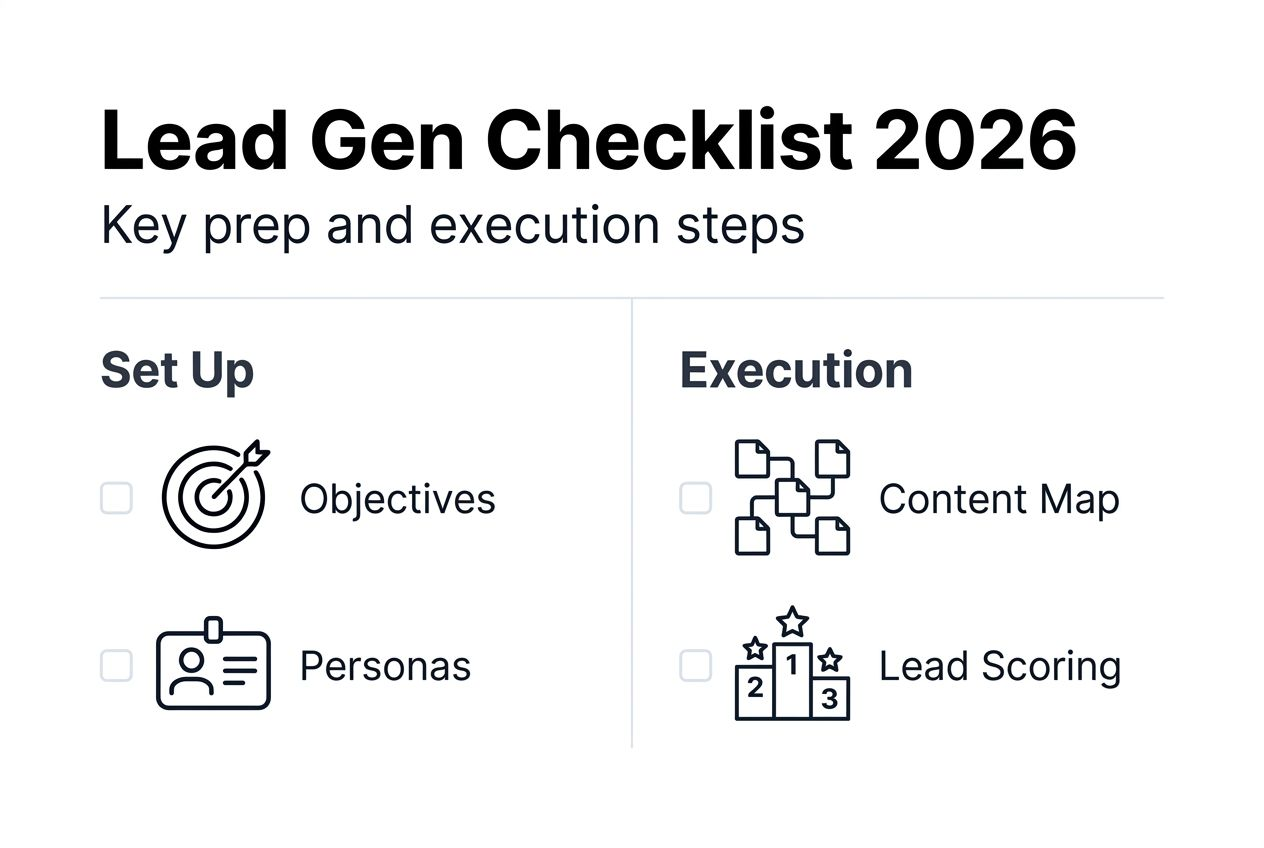
Align content to buyer journey stages. Early-stage prospects need educational content about industry trends and challenges. Mid-stage buyers want product comparisons and case studies. Late-stage leads require pricing, implementation guides, and reference calls. Mismatched content kills conversions.
Our guide to lead generation and approach to rebuilding lead generation departments provide deeper tactical frameworks. Additional B2B sales lead generation strategies offer complementary perspectives.
| Tactic | Avg. Leads/Month | Conversion to SQL | Cost per SQL |
|---|---|---|---|
| Utility tool (calculator) | 120-180 | 22-28% | $180-240 |
| Traditional content (whitepaper) | 200-300 | 8-12% | $320-450 |
| Webinar with Q&A | 80-120 | 18-24% | $210-290 |
| Free trial/demo account | 60-90 | 35-42% | $140-190 |
Pro Tip: Review lead scoring thresholds monthly using conversion data. Models that worked six months ago often become stale as buyer behavior evolves, causing you to either chase unqualified leads or miss ready-to-buy prospects.
Tactical execution checklist:
Even experienced sales leaders make mistakes that tank lead generation performance. Recognize and fix these issues quickly.
Avoid pushing demos prematurely. When SDRs book demos for prospects still in early research, no-show rates exceed 40% and conversion rates plummet. Use intent data to identify genuine buying signals before requesting meetings.
Never ignore buyer digital signals. If a prospect downloads three case studies and visits your pricing page twice in one week, they’re signaling readiness. Delayed or generic follow-up loses these hot leads to faster competitors.
Prevent siloed sales and marketing teams. When marketing optimizes for MQL volume while sales focuses on SQL quality, the disconnect creates friction and blame. Shared KPIs like pipeline contribution eliminate this problem.
Focus on lead quality metrics rather than vanity numbers. Generating 500 unqualified leads impresses no one if only 10 become customers. SQL conversion rates and customer acquisition cost matter far more than top-of-funnel volume.
Our insights on fixing IT sales problems address systemic issues that undermine lead generation efforts.
Pro Tip: Establish weekly syncs between sales and marketing where both teams review lead quality, share feedback on messaging effectiveness, and adjust scoring criteria based on what’s actually converting. This continuous loop prevents small issues from becoming major problems.
Common mistakes to eliminate:
Accurate measurement separates growing sales teams from stagnant ones. Track the right metrics to verify your lead generation effectiveness.
Track SQL conversion rates, speed-to-first-touch, and channel ROI for better insights than lead volume alone provides. If your MQL-to-SQL conversion drops below 15%, your targeting or scoring needs immediate adjustment.
Expect lead quality improvements within 3 to 6 months rather than overnight volume spikes. Building buyer trust and refining messaging takes time. Patience with quality focus beats chasing quick wins that don’t convert.
Referral leads convert 4 times faster than cold leads and close at higher rates. Factor this into success assessment by tracking referral source and velocity separately. Your best customers can become your most effective lead generation channel.
Use benchmark data to set realistic goals and identify improvement areas. The comparison table below shows what high-performing mid-sized tech sales teams achieve versus generic B2B averages.
| Metric | Mid-Sized Tech Benchmark | Generic B2B Average |
|---|---|---|
| MQL to SQL conversion | 18-25% | 10-15% |
| SQL to opportunity | 35-45% | 25-35% |
| Average sales cycle | 120-180 days | 90-150 days |
| Customer acquisition cost | $8,000-15,000 | $5,000-12,000 |
| Lead response time | Under 5 minutes | Under 24 hours |
Continuous data analysis lets you refine programs for predictable growth. Monthly reviews of channel performance, content engagement, and conversion funnels reveal optimization opportunities before they become revenue gaps.
Our resources on sales pipeline management and IT sales team optimization provide frameworks for sustained performance improvement.
Metrics dashboard essentials:
Sustained success requires continuous evolution. Adopt these practices to maintain competitive advantage.
Integrate account-based marketing and AI-driven predictive analytics for precise targeting. ABM focuses resources on high-value accounts while AI identifies patterns humans miss, like which combinations of behavioral signals predict buyer readiness.
Run multi-channel campaigns using paid ads, social media, and partner channels. Relying on one channel creates vulnerability when algorithms change or costs spike. Diversification stabilizes lead flow and reaches buyers across their preferred platforms.
Regularly update buyer personas and content strategies based on latest data. Annual persona reviews miss quarterly shifts in buyer priorities. Survey customers every 90 days about changing challenges and decision criteria.
Leverage automation to test and optimize messaging and timing continuously. A/B test email subject lines, landing page layouts, and call-to-action placement. Small improvements compound into significant conversion gains.
Stay informed on emerging sales enablement tools and technologies. New platforms for intent monitoring, conversational AI, and predictive analytics appear constantly. Early adoption can provide 12 to 18 month advantages over slower competitors.
Explore our perspectives on 2026 sales strategy trends, AI’s impact on sales, and sustainable lead generation growth for forward-looking insights.
Future-proofing actions:
Executing this checklist requires alignment, tools, and expertise that many mid-sized tech firms lack internally. Sales Label Consulting delivers proven sales enablement strategies tailored to your specific challenges and market realities.
Our step-by-step enablement programs help align sales and marketing around shared goals, implement the right technology stack, and build repeatable processes that generate quality leads consistently. We’ve helped dozens of European tech companies transform scattered lead generation into predictable revenue engines.
Explore our comprehensive sales enablement guide, review proven best practices, and discover 2026 enablement trends shaping competitive advantage. Partner with experts who understand mid-sized tech sales dynamics to implement these strategies with measurable impact.
Premature demo pushes and ignoring buyer intent signals top the list. Companies often pressure prospects into demos before proper nurturing, resulting in high no-show rates and poor conversion. Ensure sales and marketing share KPIs to avoid silos that create inefficiency and misaligned messaging.
Significant improvements in lead quality and conversion typically appear within 3 to 6 months with consistent application of checklist steps. Early wins like better lead routing happen faster, while fundamental shifts in pipeline quality require sustained effort. Continuous measurement and adjustment accelerate success and help you course-correct quickly.
CRM systems integrated with lead scoring and marketing automation platforms form the foundation. Tools that support intent data integration and multi-channel campaign execution optimize lead qualification by triggering the right actions at the right moments. Choose platforms that integrate seamlessly to avoid data silos that undermine automation benefits.
Focus on SQL conversion rates as your north star metric rather than top-of-funnel volume. Set minimum qualification thresholds based on fit and intent before passing leads to sales. This approach naturally filters out unqualified prospects while ensuring your team spends time on opportunities likely to close. Quality always drives better revenue outcomes than quantity.
Subscribe to our Insights: Expert productivity tips in your inbox
You'll receive 1-3 emails per month. Your data stays private, always.

CEO & Co-Founder with Sales Label Consulting

Lets book a free call
October 19, 2026 - 10 min read
Read article Read articleOctober 18, 2026 - 10 min read
Read article Read articleOctober 17, 2026 - 7 min read
Read article Read articleOctober 16, 2026 - 8 min read
Read article Read article