
Sales strategy trends 2026: Boost IT sales with AI
By 2026, 80% of B2B sales interactions will happen digitally driven by autonomous AI systems. Many sales leaders fear AI will replace their teams, but the reality is different. AI empowers sales reps, not replaces them. This guide reveals how European IT sales leaders can blend AI automation with coaching-first leadership to boost revenue, improve team performance, and stay ahead in a rapidly evolving market.
| Point | Details |
|---|---|
| AI-driven sales automation | Boosts efficiency and engagement by reducing research time and improving prospecting effectiveness. |
| Coaching-first leadership | Improves team performance and pipeline growth through weekly skill development and emotional intelligence. |
| Agile, data-driven playbooks | Increase win rates substantially by updating monthly based on real-time market signals. |
| Buyer-side AI evaluation | Requires AI-aware seller strategies as autonomous agents screen vendors in up to half of procurement cases. |
| European regulatory compliance | Critical for sustainable success given AI restrictions and data privacy requirements across the region. |
Europe’s IT landscape is experiencing unprecedented growth and transformation. IT spending is projected to grow 11.1% in 2026, reaching $1.4 trillion. This expansion creates massive opportunities for IT sales teams who can adapt quickly to changing buyer behaviors and technology expectations.
However, success requires understanding the unique European context. Data privacy regulations and tech sovereignty concerns shape which tools sales teams can deploy. Many European countries have introduced restrictions on certain AI platforms, affecting how sellers engage with prospects and customers.
Three key technology drivers are reshaping IT enterprise sales:
Sales leaders who recognize these drivers early can position their teams to capture emerging opportunities. The challenge lies in balancing innovation with compliance, ensuring sales technologies meet both performance and regulatory standards.
Agentic AI represents a fundamental shift in how sales teams operate. Unlike traditional AI copilots that assist with tasks, agentic AI autonomously executes lead research, outreach, and qualification. This technology handles repetitive work that previously consumed hours of rep time.

The impact is measurable. AI reduces research time by 90% and increases engagement rates by 35%. Sales reps spend more time having meaningful conversations and less time gathering basic prospect information. This shift transforms productivity and allows teams to pursue more opportunities simultaneously.
| Metric | Traditional Approach | AI-Powered Approach | Improvement |
|---|---|---|---|
| Research time per prospect | 45 minutes | 4 minutes | 90% reduction |
| Daily prospect capacity | 8-10 accounts | 25-30 accounts | 200% increase |
| Engagement response rate | 12% | 16% | 35% increase |
| Time to first meeting | 8 days | 3 days | 60% faster |
Integrating AI in sales workflows requires strategic implementation. Start by identifying high-volume, low-complexity tasks where automation delivers immediate value:
Pro Tip: Integrate AI tools tightly with your CRM from day one. Disconnected systems create data silos that undermine automation benefits and force reps to switch between platforms constantly.
The key distinction between agentic AI and copilots matters for planning. Copilots suggest actions and require human approval at each step. Agentic AI executes complete workflows autonomously within defined parameters. Both have roles, but agentic systems deliver greater efficiency gains for routine sales tasks.
Technology alone does not build high-performing sales teams. The most successful IT sales organizations in 2026 combine AI tools with coaching-first leadership cultures that prioritize skill development and emotional intelligence.
Sales teams practicing weekly skill coaching exhibit 20-30% higher engagement gains compared to metrics-only management. Coaching creates sustainable pipeline growth by continuously improving rep capabilities. Metrics reveal problems, but coaching solves them.
Emotional intelligence becomes more valuable as AI handles transactional interactions. Buyers want reps who understand their business challenges, not just product features. Leaders who develop EQ alongside technical skills create teams that build genuine relationships and close complex deals.
Effective coaching-first cultures share common characteristics:
Pro Tip: Balance AI-driven metrics with human-centric coaching by using data to identify skill gaps, then addressing those gaps through personalized development plans rather than generic training.
The shift to sales coaching techniques requires managers to evolve from scorekeepers to developers. This means investing time in observation, feedback, and skill building. AI can surface coaching opportunities by analyzing call recordings and identifying patterns, but human judgment determines how to develop each rep effectively.
Static sales playbooks fail in fast-changing markets. Buyer behaviors, competitive positioning, and market conditions shift constantly. IT sales teams need agile playbooks that evolve based on current data and insights.
Monthly updated playbooks can increase win rates by 40%. This improvement comes from continuously refining messaging, qualification criteria, and engagement strategies based on what actually works. Teams using stale playbooks repeat ineffective approaches long after they stop delivering results.
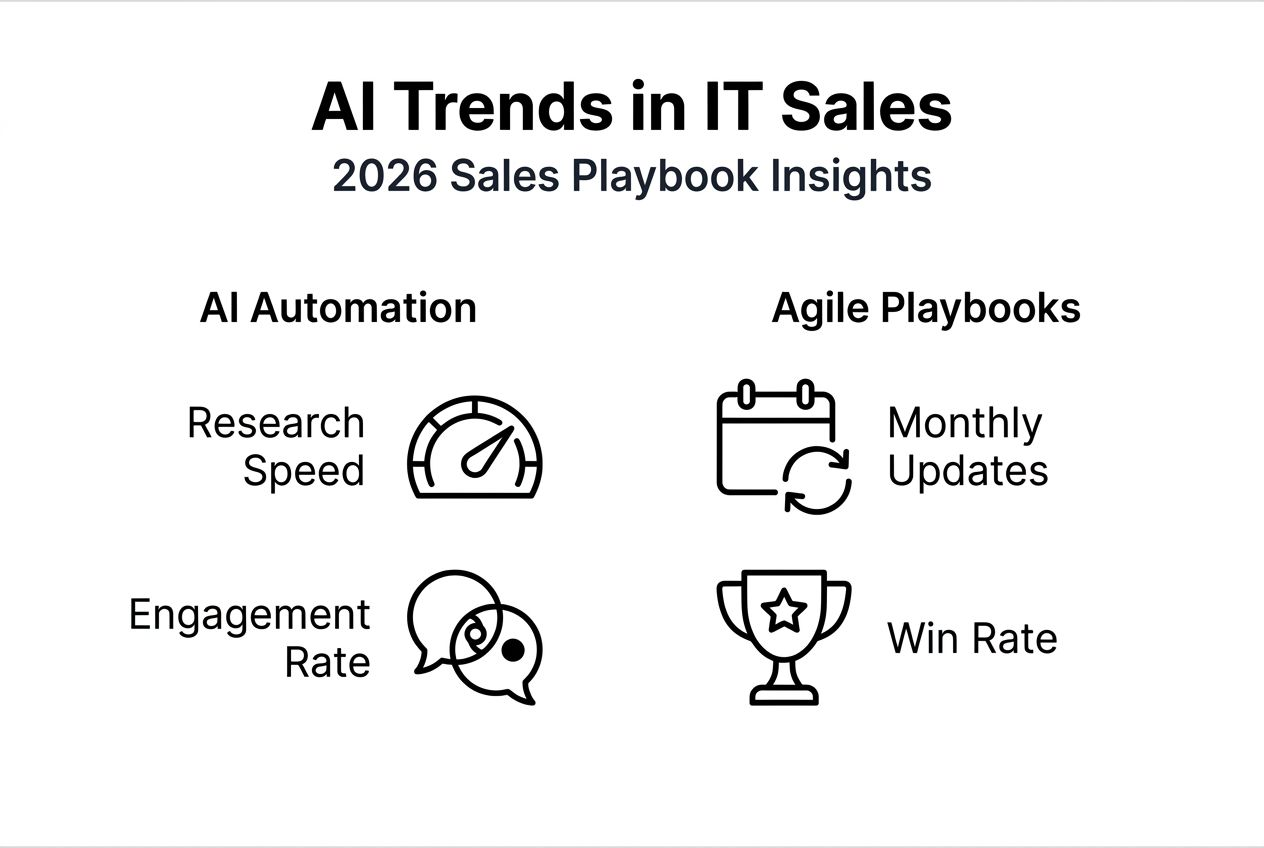
Real-time signals guide account prioritization more effectively than traditional scoring models. Buying intent data, website engagement, and competitive activity indicate which accounts are ready for engagement. Real-time account movement boosts conversion rates by 25% by focusing resources on opportunities with genuine momentum.
| Aspect | Static Playbooks | Agile Playbooks |
|---|---|---|
| Update frequency | Annually or when major changes occur | Monthly based on performance data |
| Content foundation | Best practices and assumptions | Validated tactics from recent wins |
| Messaging approach | One-size-fits-all templates | Persona and stage-specific variations |
| Adaptation speed | Slow, requires formal review cycles | Fast, incorporates feedback continuously |
| Rep adoption | Lower due to perceived irrelevance | Higher due to proven effectiveness |
Creating and maintaining agile playbooks requires a systematic approach:
Integrating sales process optimization with agile playbooks creates a continuous improvement loop. Each iteration makes the playbook more relevant and effective, driving better results and higher rep confidence.
Buyers now deploy AI tools to evaluate vendors before human contact occurs. These autonomous agents screen potential suppliers, assess capabilities, and rank options based on predefined criteria. In up to half of procurement cases, AI conducts initial vendor evaluation without human oversight.
This shift fundamentally changes how sellers must approach digital presence and content. Your website, case studies, and technical documentation need optimization for AI evaluation algorithms, not just human readers. AI agents prioritize structured data, clear capability statements, and quantifiable results over marketing language and design aesthetics.
Building digital trust becomes critical in AI-first buyer journeys. When an AI agent encounters vague claims or missing information, it downgrades your vendor score. Transparency and specificity win:
Sellers need AI-aware engagement strategies that recognize when prospects have already completed AI-driven research. The first conversation often happens after buyers have narrowed their shortlist. Reps must quickly demonstrate deep understanding of prospect needs and differentiate based on nuanced value, not basic capabilities the AI already evaluated.
Understanding how AI is reshaping sales tech helps teams adapt their digital strategies. The goal is not gaming AI algorithms but ensuring your genuine capabilities are accurately understood and valued by both human and AI evaluators.
Europe’s regulatory landscape creates unique challenges for sales technology adoption. Approximately 35% of European countries have introduced restrictions on certain AI platforms, limiting which tools sales teams can deploy. These restrictions stem from data privacy concerns and tech sovereignty priorities.
Privacy rules drive first-party data strategies for sellers. Relying on third-party data sources becomes riskier as regulations tighten and enforcement increases. Successful teams build direct relationships that generate proprietary insights while maintaining compliance with GDPR and national privacy laws.
Balancing innovation with compliance is essential for sustainable growth:
Early legal integration avoids costly delays and modifications. Retrofitting compliance into deployed systems costs significantly more than designing it in from the start. Work with legal teams during technology selection, not just contract negotiation.
Building IT sales team mastery requires understanding how regulatory constraints shape strategy. Limitations on certain tools force creativity and differentiation. Teams that excel within regulatory boundaries often develop more robust, sustainable processes than those operating in less restricted markets.
Transforming sales strategies requires systematic implementation. These actionable steps help European IT sales leaders adopt AI tools, develop coaching cultures, and implement agile playbooks:
Pro Tip: Start with small AI pilots focused on specific use cases rather than attempting broad transformation. Measure impact rigorously, learn from results, then scale successful implementations across the team.
Success requires balancing multiple priorities simultaneously. Technology implementation must align with skill development. Process improvements need cultural support. Building IT sales team mastery means coordinating these elements rather than pursuing them in isolation.
The path to sales enablement step by step involves continuous iteration. No single change transforms performance overnight. Compound improvements across technology, process, and skills create sustainable competitive advantage.
Implementing these strategies requires expertise and dedicated resources many IT companies lack internally. Sales Label Consulting specializes in helping European IT sales leaders build predictable, scalable revenue engines through customized sales enablement programs.
Our approach combines coaching-first leadership development with AI tool integration and agile playbook creation. We work alongside your teams to implement proven frameworks that deliver measurable results, not generic training that fails to stick.
Whether you need comprehensive sales enablement step by step guidance, want to adopt sales enablement best practices tailored to IT sales, or seek insights into sales enablement trends 2026, we bring deep expertise from building successful sales organizations across Europe.
No, AI empowers sales reps rather than replacing them. AI handles research, data entry, and routine tasks, freeing reps to focus on relationship building and complex problem solving that require human judgment and emotional intelligence.
Update sales playbooks monthly based on performance data and market feedback. This frequency allows you to incorporate learnings from recent deals while maintaining consistency for your team.
Coaching-first leadership develops rep skills continuously, creating sustainable performance improvements. Metrics-focused management identifies problems but does not build the capabilities needed to solve them, leading to temporary fixes rather than lasting growth.
Non-compliance risks significant fines, legal action, and reputational damage that can destroy customer trust. European regulators actively enforce privacy laws, making compliance essential for sustainable business operations.
Use automation for high-volume, low-complexity tasks like research and scheduling. Reserve human interaction for discovery, relationship building, and complex problem solving where emotional intelligence and creativity add unique value.
Subscribe to our Insights: Expert productivity tips in your inbox
You'll receive 1-3 emails per month. Your data stays private, always.

CRO & Co-Founder with Sales Label Consulting
Lets book a free call
October 23, 2026 - 10 min read
Read article Read articleOctober 22, 2026 - 9 min read
Read article Read articleOctober 21, 2026 - 9 min read
Read article Read articleOctober 20, 2026 - 9 min read
Read article Read article