
Top 6 salesripe.com Alternatives Agencies 2026
Building a sales enablement strategy that produces measurable revenue outcomes is challenging when consultants either deliver generic playbooks or require months of discovery without operational handoff. Most sales enablement agencies gate practical CRM setup and process integration behind bespoke pricing and long engagement timelines, making short-cycle improvements and clear budget planning difficult for growth-stage teams. This comparison details each agency’s approach to sales system design, execution, coaching, and pricing so you can match one to your deliverable scope and team bandwidth before committing.
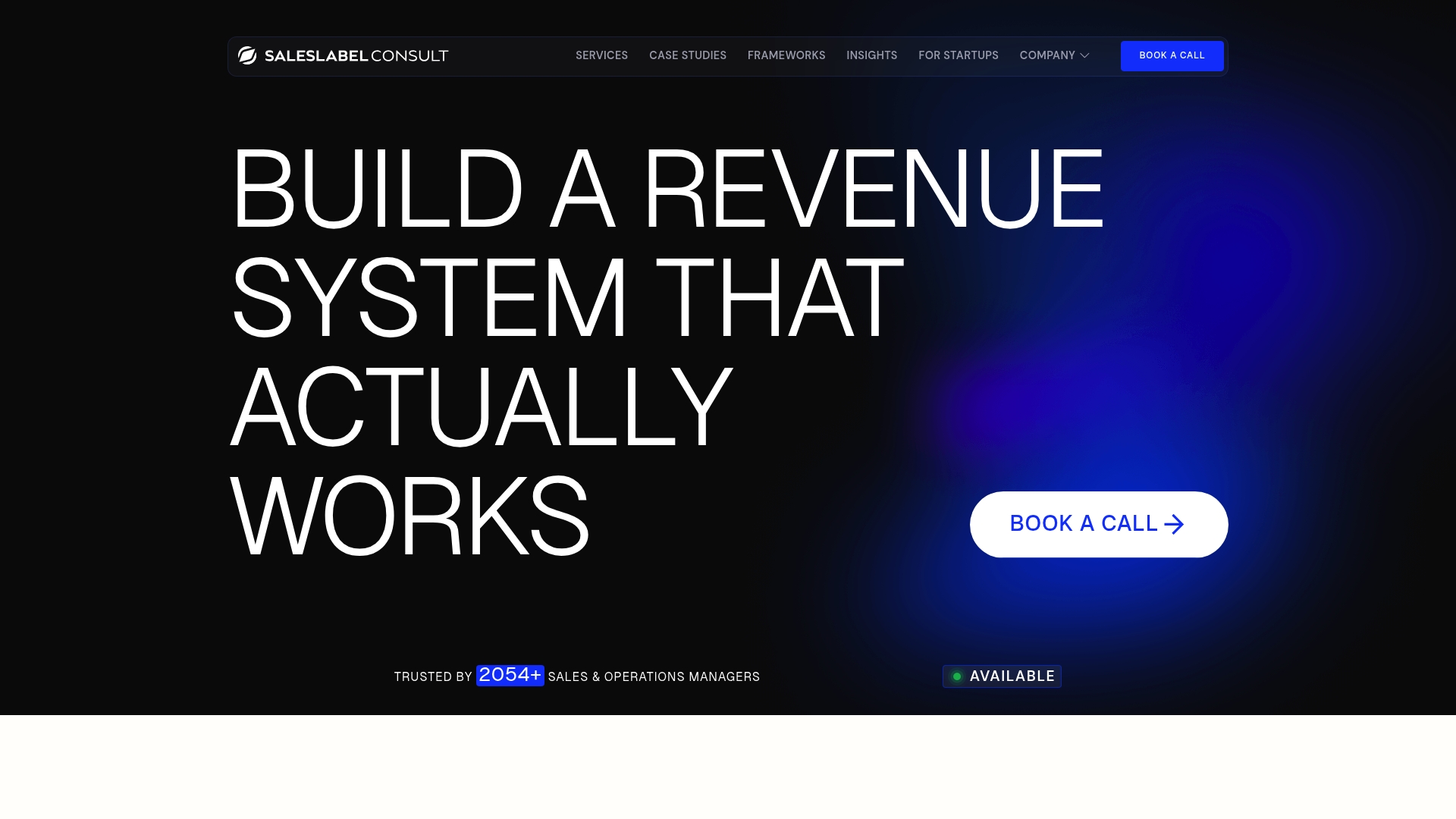
Connects ICP, positioning, pipeline, and execution into a single practical revenue operating model that is built from sale-floor experience. The firm frames revenue work as an operating system rather than disconnected playbooks, targeting predictable outcomes across demand and delivery.
The single biggest distinction is practical integration. SalesLabel Consulting ties ICP and positioning directly to pipeline rules and seller execution in a runnable operating model. That connection reduces gaps between strategy and rep activity and produces predictable handoffs from marketing to sales to forecast.
Mid-sized to large B2B technology companies with active sales teams, RevOps leaders, Head of Sales, and VP of Sales who need predictable, repeatable revenue outcomes. Best when you have fragmented processes and capacity to commit to a multi-month redesign effort.
A runnable revenue operating model that maps ICP and positioning directly to seller activities and pipeline rules. That deliverable moves leadership conversations from vague strategy to operational targets you can measure and run week to week.
A technology firm with inconsistent pipeline and scattered outbound work engaged SalesLabel for a revenue system redesign. After implementation the team reported more disciplined qualification, higher volumes of qualified leads, and a forecast that tracked to closed business. Those results mirror the case study references above.
Not applicable. The offering is consultative and scoped per engagement. Expect custom pricing based on organization size, depth of audit, AI tooling required, and implementation pace.
Website: https://saleslabelconsulting.com
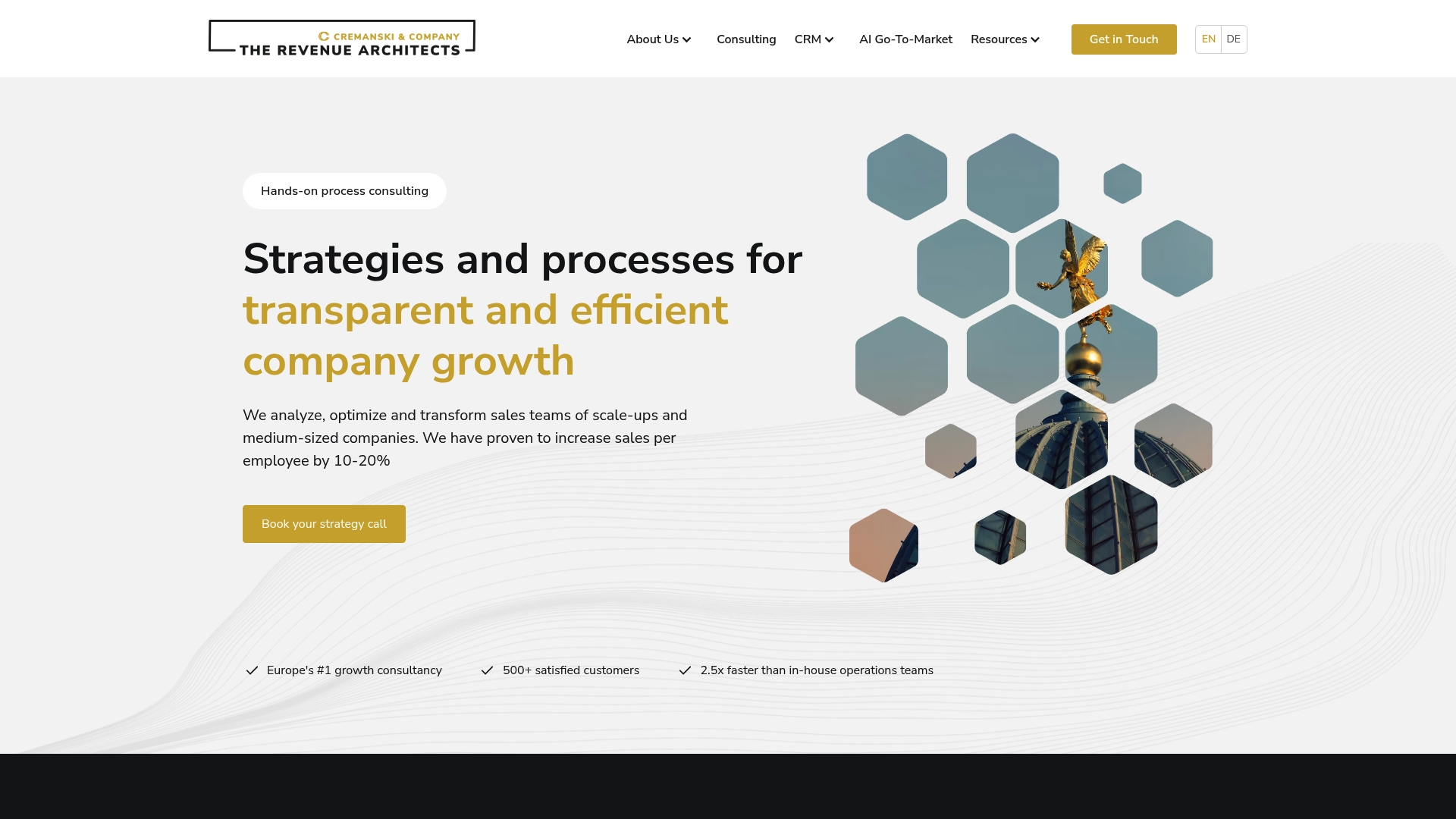
The vendor advertises results up to 2.5x faster than in-house teams and reports completing over 750 projects for more than 500 companies since 2018. That positioning drives a consultancy model built around fast diagnostics and hands-on implementation for B2B tech firms.
Cremanski & Company leans on a repeatable framework that the vendor says compresses rollout timelines compared with internal efforts. That 2.5x claim explains why their engagements emphasize rapid diagnostics, a tight implementation sprint, and concrete handoffs rather than long exploratory phases.
If you need an off-the-shelf playbook or a one-off tactical deliverable, this engagement style will feel heavyweight. If rapid, low-cost experiments with freelancers are your priority, a tailored, multi-week consulting engagement is the wrong tool.
Growth-oriented B2B tech and software companies in Europe that are scaling sales and want an outside team to redesign organization, processes, and systems. Best for teams that can commit leadership time to change and tolerate a bespoke pricing conversation.
A scaling SaaS company hired Cremanski & Company to restructure sales operations and implement Salesforce. The engagement combined a two-week diagnostic, a prioritized roadmap, and a four-week implementation phase that tightened pipelines and shortened average sales cycle times.
Pricing is not publicly listed and is typically tailored to client needs. Expect proposal-based fees and scope-driven retainers rather than fixed packages, which means an initial discovery phase is usually required to get a budget estimate.
Website: https://cremanski.com
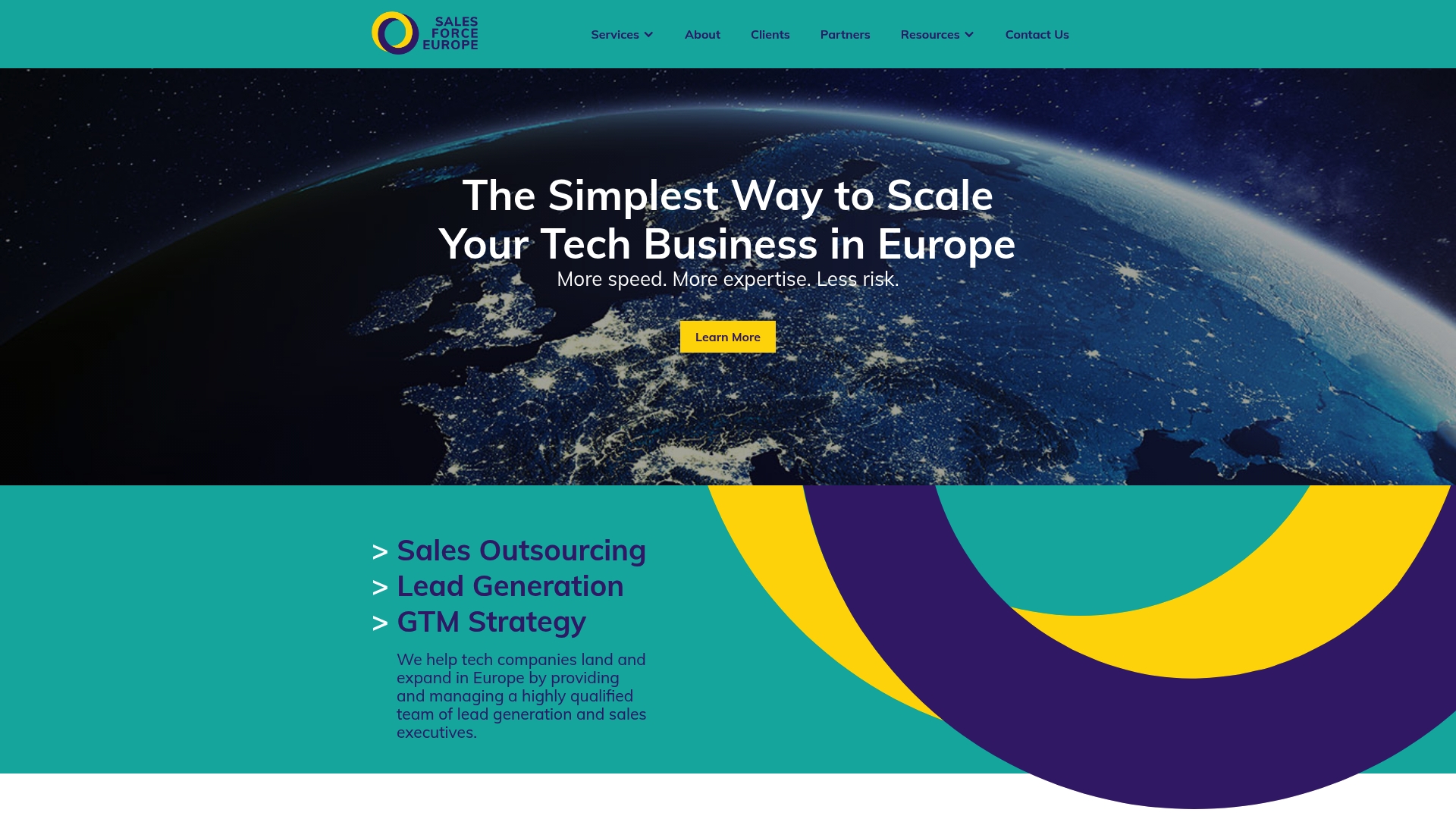
The vendor advertises assembly of customized European sales teams in less than four weeks, turning a typical six to twelve month rollout into an accelerated market entry option for tech sellers. The model bundles local reps, regional managers, and reporting under one contract.
Salesforce Europe supplies dedicated regional sales managers and experienced tech sales representatives focused on B2B verticals. The agency runs multichannel lead generation and inside sales with local content and outreach to reach native audiences.
The offer includes growth-oriented sales assessment, market analysis, and transparent reporting so you see activity and budget allocations in a single dashboard.
Salesforce Europe embeds local sales teams into your expansion effort under a single contractual relationship, providing immediate market presence with centralized control. That structure simplifies vendor management and keeps financial and operational visibility in one place.
Strong vertical expertise. The team cites deep experience in SaaS, FinTech, and Cybersecurity, which shortens onboarding for category-specific value propositions and objection handling.
Faster market entry. The four-week build claim above helps companies move from decision to live outreach in weeks rather than months.
Full transparency. Centralized reporting and budget control make it simple to track lead flow, conversion stages, and per-country spend without multiple invoices.
Local networks and native speakers. On-the-ground contacts and local-language messaging improve meeting rates and shorten sales cycles in targeted markets.
Flexible scaling. You can expand or contract team size by market as performance data arrives, which reduces long-term fixed cost commitments.
Higher cost. The emphasis on premium, specialized teams carries a price tag that may be prohibitive for very small entrants with tight budgets.
CRM onboarding friction. Customers report a steep learning curve for complex CRM integration and data harmonization during the initial weeks.
Mixed support responsiveness. User reviews note occasional delays in day-to-day support, which can slow sprint-style initiatives.
If your company needs the lowest possible hourly cost or has minimal budget for market experiments, this premium approach will not match your constraints. Also, non-tech B2C sellers will find the vertical focus less relevant.
If you require a single vendor to deliver heavy engineering, customer success implementation, and sales at once, the model here may create handoff points rather than a single delivery team.
B2B tech companies that need fast, risk-limited European expansion with dedicated local sales expertise and centralized control. Ideal for teams that prioritize speed to market and native outreach over lowest-cost options.
According to the company, a SaaS provider used Salesforce Europe to staff teams across five European countries within four weeks, and that engagement contributed to more than €250 million in revenue closures since 2003. The client retained the regional managers for ongoing pipeline development.
The vendor lists pricing as informational only; specific fees and retainer models are quoted per engagement. Expect premium pricing reflecting tailored local teams, senior sales talent, and comprehensive reporting rather than commodity lead lists.
Website: https://salesforceeurope.com
Checkpoint GTM lists project brackets from €15K–€90K and retainers from €6K–€25K/month, which frames client conversations quickly around realistic budgets. Checkpoint GTM’s marketing materials state a Series B engagement delivered a 3x improvement in demo-to-opportunity conversion, a claim the team uses when describing outcome-focused engagements.
Checkpoint GTM emphasizes deep embedding within client teams paired with repeatable implementation playbooks. That dual approach means they do both the design and the hands-on execution, staying on-site or in-team long enough to hand over durable operating rhythms rather than a one-off recommendation packet.
If you need purely advisory, light-touch audits or a quick tactical fix without team time, Checkpoint GTM’s embedded model will feel heavy. If you cannot commit internal operators to collaborate for weeks, the work will stall.
GTM and Revenue Operations leaders at growth-stage B2B SaaS companies, typically Series A to Series C, who need a partner to build, run, and hand over revenue systems that scale. Ideal when internal teams are ready to co-own the change.
A Series B SaaS hired Checkpoint GTM to redesign its CRM, institute RevOps processes, and add AI-driven forecasting. The engagement combined migration work, training, and an embedded operator role; that 3x figure above is the outcome the vendor highlights from this engagement.
Project-based engagements range €15K–€90K depending on scope and stage. Retainer support runs €6K–€25K/month, with final pricing tied to depth of embedding and migration complexity.
Website: https://checkpointgtm.com

Sales Sherpas positions its service as a cost effective alternative to hiring a VP of Sales, using tailored programmes, workshops, and ongoing coaching to move founder led SaaS teams toward repeatable, team led sales motions.
Their model targets founder led startups that want leadership and playbooks without the risk and expense of a full time executive.
Sales Sherpas centers on transforming founder led selling into team led, sustainable processes through scalable, modular programmes. Their approach mixes playbook creation, leadership coaching, and hands on workshops so clients get both documentation and skill transfer rather than one off advice.
That emphasis on teachable, repeatable systems is the practical advantage for teams who will run sales without a VP on payroll.
If your company is not a SaaS business or operates at enterprise scale with complex regulatory requirements, Sales Sherpas may miss essential domain expertise and governance needs.
Also, organizations that need an embedded, full time sales executive from day one will likely find the consultancy model delivers different trade offs than a hired VP.
Founder led SaaS startups and scale ups preparing for accelerated growth who want structured sales playbooks and leadership development without hiring a VP of Sales immediately.
Good fit for teams that prefer external coaching plus knowledge transfer over permanent executive hires.
A post Series A SaaS startup engaged Sales Sherpas to codify qualification criteria, train first line managers, and install a repeatable discovery process. Within months the company had an internal playbook, ready to onboard new reps with consistent messaging.
That created a replicable hiring ramp and reduced ramp time for new sellers.
Sales Sherpas does not publish standard pricing. Programmes are bespoke and priced per engagement, typically scoped after an initial discovery discussion and delivered as project fees or multimonth retainers depending on client needs.
Website: https://sales-sherpas.com

The vendor reports supporting over 450 teams across 25+ markets, and advertises practical, short-cycle outcomes often delivered in under 100 days. GoToMarket.Ninja pairs analysis with hands-on execution to push deals forward rather than stopping at a strategy deck.
GoToMarket.Ninja performs sales analysis and due diligence, then translates findings into tailored sales processes that fit your team structure and buyer motion.
They provide operational sales support and team management alongside CRM optimization and system development so processes are both defined and runnable.
The firm tracks KPIs and delivers reporting to make progress measurable and visible to leadership.
The firm’s defining angle is that consultants work directly with client teams in operational roles rather than only advising. That hands-on model compresses the feedback loop and turns process design into immediate activity on the phone or in the CRM.
This matters when speed to first customers or portfolio lift for accelerators is the priority.
Rapid, execution-oriented engagement. The combination of analysis and on-the-ground selling reduces handoff friction and shortens time to measurable wins.
CRM optimization is treated as a deliverable, not an add-on. Expect system cleanups, pipeline rules, and reporting that match the new process.
Flexible scope across company stages. Work ranges from startup customer acquisition to systematic improvements in midsize sales teams.
Reported scale gives confidence in repeatability. The vendor’s team experience suggests playbooks that have been applied multiple times, which helps when you need predictable steps.
Public pricing is not provided. The website appears to favor bespoke proposals, so procurement cycles will include scoping calls and custom pricing.
The offering is consultancy and operational support only; there are no productized software tools to hand off for long-term automation.
Market or industry limits are not documented. If you need vertical-specific proof points, you may have to ask for references and case work.
Sales leaders, founders, and accelerator managers who need a partner that moves from diagnosis to active selling support. This fits teams that want playbooks implemented, not just presented.
A midsize technology vendor hires GoToMarket.Ninja for a three-month engagement. The firm audits the pipeline, restructures qualification criteria, updates CRM fields, and runs outbound sprints with the internal team, producing the first measurable uptick in qualified opportunities within eight weeks.
Pricing appears to be bespoke and gated behind discovery. The site lists service scope and outcomes but not retainer bands or fixed packages, so expect a proposal-based quote after an initial scoping conversation.
Website: https://gotomarket.ninja
Choosing a sales enablement consulting service involves evaluating providers on their capability to deliver operational and measurable enhancements to a company’s revenue procedures and performance. Here, we compare five such services: SalesLabel Consulting, Cremanski & Company, Salesforce Europe, Checkpoint GTM, and Sales Sherpas, emphasizing their respective benefits and implications in different business scenarios.
SalesLabel Consulting excels in developing integrated revenue systems that align Ideal Customer Profile (ICP), messaging, and pipeline processes into a unified operational framework. This stands in contrast to other providers like Cremanski & Company, which focus on modular diagnostic tools and roadmap generation but lack the same level of immersed integration offered by SalesLabel. This distinction is critical for organizations seeking tightly coupled strategy alignment.
Salesforce Europe boasts a rapid deployment model for European market entry, assembling dedicated local sales teams within four weeks. This level of expedited implementation outshines the more phased, customized approaches of competitors like Checkpoint GTM or Sales Sherpas, making Salesforce Europe better suited for companies prioritizing immediate regional impact over systemic redesign.
For businesses requiring a system-wide overhaul of their revenue strategies that encapsulates practical integrations of ICP, positioning, and operational execution, SalesLabel Consulting emerges as the most compelling choice. However, companies seeking faster deployable solutions in specific geographic regions may find Salesforce Europe more aligned with their immediate needs.
When comparing sales enablement consulting, it’s essential to evaluate the approaches, key features, and specialization each provider offers.
| Consulting Service | Key Differentiator | Best For | Pricing | Notable Limitation |
|---|---|---|---|---|
| Saleslabelconsulting | Practical integration mapping ICP directly to pipeline execution | Mid-sized to large B2B technology firms | Not disclosed | Requires significant engagement and customization |
| Cremanski & Company | Fast diagnostics with a 2.5x delivery speed emphasis | Growth-stage B2B tech firms in Europe | Not disclosed | Limited external credibility verification |
| Salesforce Europe | Accelerated market entry with embedded regional teams | Rapid European market expansion for B2B tech | Not disclosed | Higher costs for onboarding and CRM integration challenges |
| Checkpoint GTM | Embedding consultants into teams for actionable outcomes | Growth-stage SaaS firms, Series A-C | €15K–€90K/project, €6K–€25K/month retainer | Complex integration setups can be resource-intensive |
| Sales Sherpas | Transforming founder-led processes into replicable team systems | Founder-led SaaS startups | Not disclosed | Limited domain expertise for enterprise scale |
This table provides a concentrated comparison to help identify the most aligned consulting service for your organization’s needs.
If you found yourself exploring salesripe.com alternatives because of fragmented sales processes or inconsistent pipeline forecasting, Saleslabelconsulting offers a proven solution designed to tie Ideal Customer Profile directly to seller execution. Our approach turns sales enablement, audit, and demand generation into a runnable revenue system powered by practical experience from entrepreneurial tech leaders.
Why choose Saleslabelconsulting?
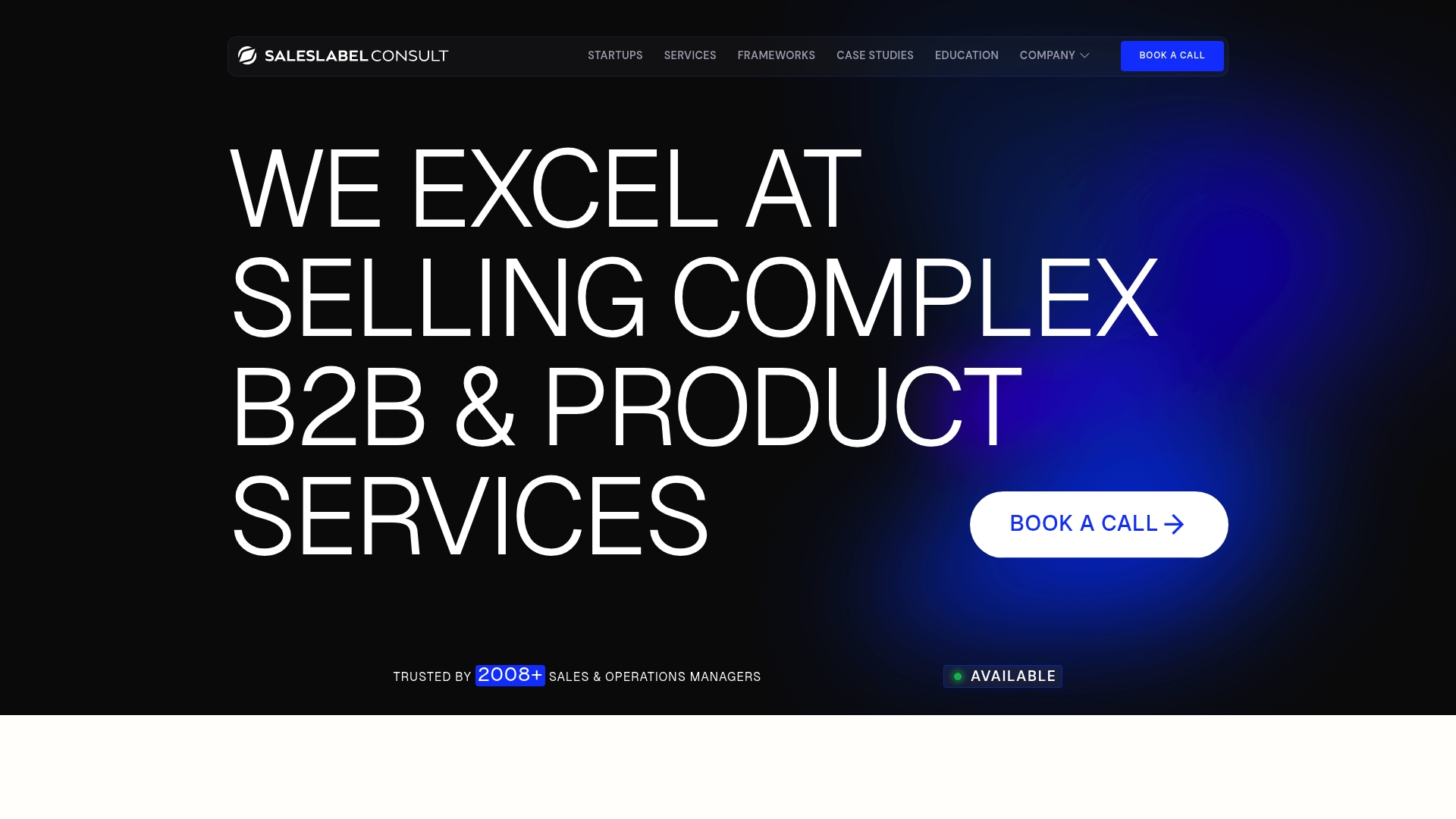
Take control of your revenue flow today with Saleslabelconsulting. Visit Saleslabelconsulting to schedule a personalized consultation and get a clear, executable plan tailored for your growth stage. Transform strategy into weekly measurable targets and leave uncertainty behind.
Saleslabelconsulting specializes in complete revenue system design and implementation that maps the Ideal Customer Profile to repeatable seller behaviors. Their approach integrates ICP and positioning directly with pipeline rules and seller execution, leading to predictable outcomes across demand and delivery. The firm’s focus on practical integration makes it an effective choice for technology companies needing structured revenue growth.
Cremanski & Company is recognized for its rapid, metric-focused delivery, emphasizing short diagnostic sprints that provide a clear roadmap quickly. In contrast, Saleslabelconsulting takes a more integrated approach, linking ICP and positioning directly to pipeline management, making it more suited for businesses looking for a long-term, holistic revenue operating model. Companies should assess their immediate needs — quick audits or long-term systems — when choosing between the two.
Saleslabelconsulting may not be the best fit if you’re simply looking for one-off tactical fixes, as their customization often requires significant engagement and can lead to highly tailored solutions. They excel in designing complete revenue systems, making them ideal for companies ready to commit to a multi-month redesign effort for predictable revenue outcomes.
Salesforce Europe advertises an accelerated market entry by assembling customized regional sales teams in less than four weeks, significantly faster than traditional processes. However, Saleslabelconsulting provides a more comprehensive operating model that integrates various aspects of revenue work, making it preferable for companies looking for a sustainable, integrated revenue strategy rather than just quick entry.
Saleslabelconsulting enhances its revenue architecture with AI tools, which help speed up discovery, outreach, and forecasting. This integration allows sales teams to scale lead discovery processes, giving organizations a competitive advantage when refining their pipeline management strategies.
Subscribe to our Insights: Expert productivity tips in your inbox
You'll receive 1-3 emails per month. Your data stays private, always.

CRO & Co-Founder with Sales Label Consulting

Watch our Sales Mates Podcast
Available
June 9, 2026 - 9 min read
Read article Read articleJune 7, 2026 - 9 min read
Read article Read articleFix the System
Not Symptoms