
Why Invest in Sales Enablement: Boost Team ROI
Sales leaders in European tech firms know the pressure of aligning teams, delivering results, and keeping up with shifting customer demands. Without the right structure, even experienced sales teams can struggle to find their rhythm, wasting valuable energy on uncoordinated activities. A strategic focus on sales enablement turns these challenges into growth opportunities, offering practical frameworks and real-world tools that help your organization adapt, empower your sellers, and drive revenue forward.
| Point | Details |
|---|---|
| Sales Enablement Enhances Performance | A strategic framework empowers sales teams with necessary tools, knowledge, and resources to improve customer engagement and streamline sales processes. |
| Technology Integration is Essential | Advanced CRM systems and analytics tools provide sales teams with actionable insights and enable seamless communication. |
| Training Should be Continuous | Ongoing development programs and adaptive learning methods help sales professionals stay aligned with market changes and buyer personas. |
| Avoid Common Implementation Pitfalls | Organizations should establish clear strategies, ensure cross-functional collaboration, and actively measure performance to maximize the success of sales enablement initiatives. |
Sales enablement represents a strategic approach that transforms how organizations support their sales teams by providing comprehensive resources, training, and technological infrastructure. At its core, sales enablement integrates critical resources to optimize customer interactions and streamline sales processes.
The fundamental goal of sales enablement is to empower sales representatives with the tools, knowledge, and support necessary to engage customers more effectively throughout the entire buying journey. This involves several key components:
Modern sales enablement goes beyond traditional training methods by creating a dynamic ecosystem that adapts to evolving customer demands. It recognizes that sales professionals need continuous learning, real-time insights, and flexible resources to navigate complex buyer landscapes.
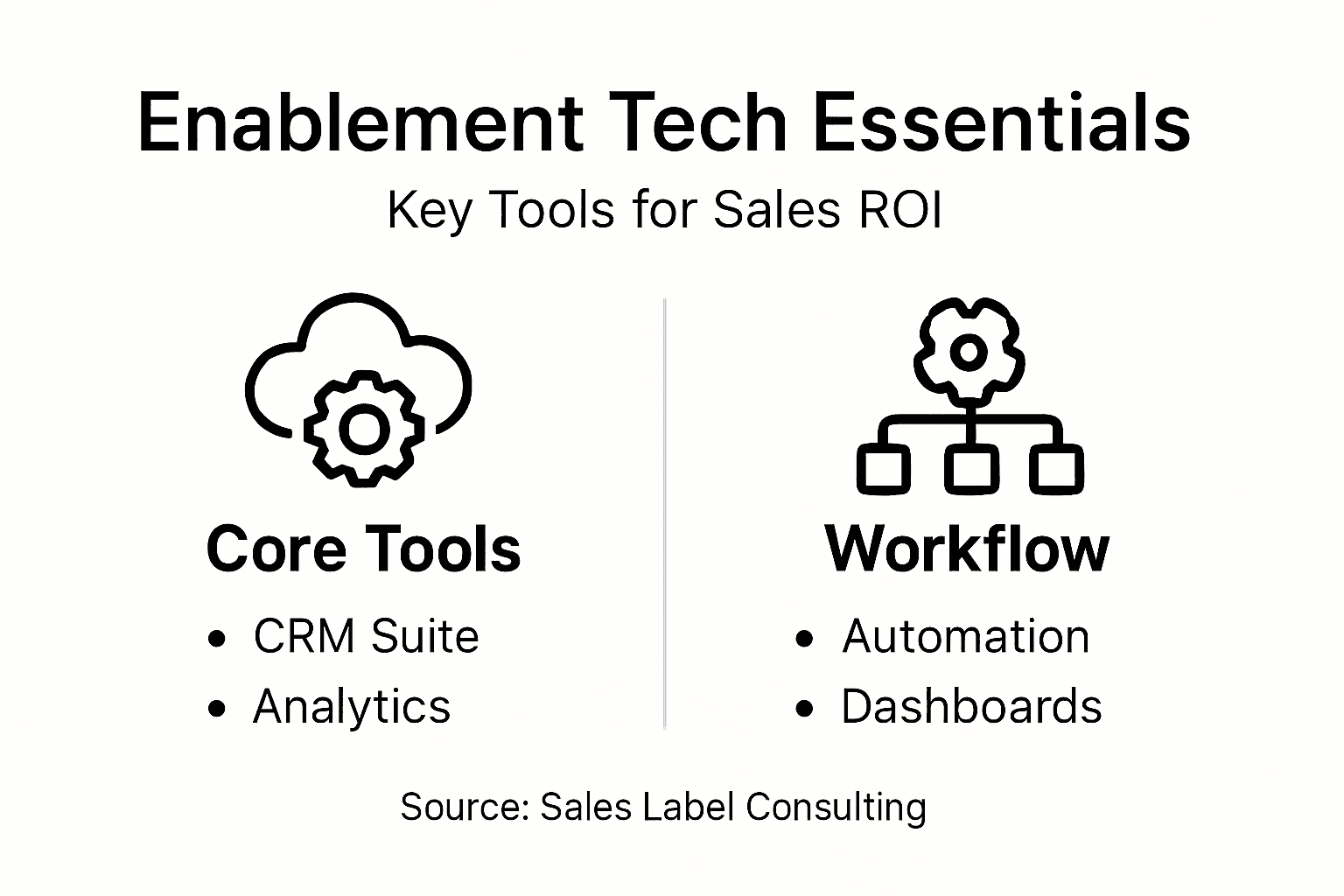
Technology integration plays a critical role in contemporary sales enablement strategies. By leveraging advanced CRM systems, analytics tools, and communication platforms, organizations can provide sales teams with actionable intelligence and streamlined workflows.
Pro tip: Implement a quarterly sales enablement audit to ensure your resources remain current and aligned with changing market dynamics.
Tech firms typically implement multiple strategic sales enablement approaches that address their unique organizational complexities. These variations are designed to align sales capabilities with rapidly evolving market demands and technological innovations.
The primary strategic variations for tech firm sales enablement include:
Each variation requires a nuanced approach tailored to the specific technological ecosystem and customer engagement model of the organization. Successful tech firms recognize that sales enablement is not a one-size-fits-all strategy but a dynamic, continuously evolving process of empowering sales professionals.
Customer journey mapping becomes crucial in these strategic variations, allowing sales teams to develop targeted enablement resources that address specific buyer personas and complex decision-making processes in technological sales environments.
Pro tip: Develop a cross-functional enablement task force that includes representatives from sales, marketing, product, and customer success to ensure comprehensive strategy development.
Sales enablement encompasses a comprehensive ecosystem of integrated tools, training methodologies, and strategic processes designed to maximize sales team performance and organizational effectiveness. These core features work synergistically to create a robust framework for continuous sales improvement.
The primary components of sales enablement infrastructure include:
Technological infrastructure plays a critical role in modern sales enablement, providing real-time insights, automated workflows, and comprehensive performance tracking capabilities. These tools transform raw data into actionable intelligence, helping sales teams make informed strategic decisions.
Effective sales processes ensure seamless integration between tools, training, and organizational objectives. This involves creating standardized workflows, establishing clear communication channels, and developing adaptive learning frameworks that respond quickly to market changes.
Pro tip: Conduct quarterly technology audits to ensure your sales enablement tools remain cutting-edge and aligned with evolving business requirements.
Here’s a summary of how core sales enablement features impact business value:
| Feature Category | Example Tools & Methods | Business Impact |
|---|---|---|
| Technology Integration | CRM, analytics, collaboration | Faster decision-making, improved tracking |
| Training Programs | Adaptive workshops, skill coaching | Higher sales competency, faster onboarding |
| Process Development | Standardized workflows, audits | Consistency, easier performance scaling |
European technology companies are increasingly adopting sophisticated sales enablement strategies, with practical implementations demonstrating significant organizational transformations. The development of integrated learning management systems represents a cutting-edge approach to knowledge transfer and skill enhancement in tech ecosystems.
Specific real-world applications across EU tech sectors include:
Technology transfer plays a critical role in these implementations, with successful EU tech firms creating dynamic ecosystems that continuously evolve sales capabilities. These approaches go beyond traditional training models, emphasizing real-time learning, data-driven insights, and adaptive skill development.

Successful case studies demonstrate that sales enablement is not just a technological intervention, but a holistic strategy that aligns people, processes, and technological resources to drive organizational performance and competitive advantage.
Pro tip: Design your sales enablement strategy as a flexible framework that can rapidly adapt to emerging technological and market trends.
Implementing sales enablement requires strategic planning and awareness of potential pitfalls that can derail organizational efforts. Organizations must be prepared to navigate complex implementation challenges to ensure successful adoption and sustainable performance improvement.
Key risks and potential mistakes include:
Financial considerations play a significant role in sales enablement investments. Companies must balance initial implementation costs with long-term potential returns, carefully evaluating technology investments, training expenses, and potential productivity gains.
Successful sales enablement requires a holistic approach that goes beyond mere tool acquisition. It demands continuous evaluation, adaptable strategies, and a commitment to creating a dynamic learning environment that supports sales team growth and organizational objectives.
Pro tip: Conduct comprehensive cost-benefit analyses and pilot programs before full-scale sales enablement implementation to mitigate financial risks and validate strategic approaches.
Understanding the nuanced differences between sales enablement and alternative approaches is crucial for organizations seeking to optimize their sales performance. Sales enablement distinguishes itself from traditional sales strategies through its comprehensive, holistic approach to supporting sales teams.
Key comparative dimensions include:
Functional differences emerge through the strategic intent of each approach. While traditional sales training focuses narrowly on skill development, sales enablement creates a dynamic environment that integrates technology, content, coaching, and strategic alignment to drive consistent performance improvement.
Successful organizations recognize that these approaches are not mutually exclusive but complementary. Sales enablement does not replace existing functions but elevates them through a more integrated, data-driven, and holistic framework that supports sales professionals throughout their entire performance journey.
Pro tip: Conduct a comprehensive audit of your current sales support mechanisms to identify gaps where sales enablement can provide more strategic value.
This comparison highlights key differences between sales enablement and alternative approaches:
| Dimension | Sales Enablement | Traditional Alternatives |
|---|---|---|
| Approach | Holistic, ongoing support | Isolated, episodic interventions |
| Technology Use | Integrated, data-driven | Limited or manual systems |
| Alignment | Cross-functional collaboration | Departmental silos |
| Learning Model | Personalized, adaptive | Generalized, static |
The article highlights the challenges of implementing effective sales enablement strategies such as aligning technology, training, and cross-functional processes to boost team performance and maximize ROI. Tackling issues like underutilized tools, poor communication, and lack of strategic clarity can be overwhelming without the right guidance. If you want to overcome these hurdles and empower your sales team with personalized coaching, data-driven insights, and seamless collaboration, it is time to invest in a proven approach.
Leverage the extensive entrepreneurial tech experience of Sales Label Consulting. We specialize in sales enablement, sales audit, and demand generation designed to resolve your critical pain points including skill development, technology integration, and strategic alignment. Start driving predictable, error-free results by partnering with our experts who understand the complexities described in the article and can help you implement a dynamic, ongoing sales enablement process.
Take the first step toward transforming your sales outcomes today. Explore how our tailored solutions can accelerate your growth at Sales Label Consulting. Discover effective sales enablement strategies by visiting our consulting services and learn how to conduct a thorough sales audit that aligns with your goals.

Don’t wait for costly mistakes or slow progress. Contact us now to boost your sales team’s ROI with a strategic sales enablement plan proven to deliver lasting business value.
Sales enablement is a strategic approach that provides sales teams with resources, training, and technology to improve customer engagement and streamline sales processes. It is important because it empowers sales representatives to effectively navigate the buying journey, leading to higher conversion rates and increased revenue.
Technology enhances sales enablement by integrating advanced CRM systems, analytics tools, and communication platforms. This allows for real-time insights, automated workflows, and better tracking of performance, enabling sales teams to make informed decisions quickly.
A successful sales enablement strategy typically includes comprehensive training programs, a robust content library, effective use of technology tools, and strategic alignment between marketing, sales, and customer support teams to ensure consistent messaging and support throughout the sales process.
Common mistakes include lacking a clear enablement strategy, failing to foster cross-functional collaboration, underutilizing technology tools, and neglecting to collect performance metrics. Avoiding these pitfalls can lead to more effective implementation and enhanced team performance.
Subscribe to our Insights: Expert productivity tips in your inbox
You'll receive 1-3 emails per month. Your data stays private, always.

CRO & Co-Founder with Sales Label Consulting

Book a free consultation call
October 24, 2026 - 8 min read
Read article Read articleOctober 23, 2026 - 10 min read
Read article Read articleOctober 22, 2026 - 9 min read
Read article Read articleOctober 21, 2026 - 9 min read
Read article Read article