
Sales Enablement Trends 2026: Driving B2B Growth
Longer buyer timelines and digital self-education are quickly redefining sales success in the European technology sector. Sales enablement has become a critical function as B2B buyers grow more independent and demand personalized, data-driven interactions. This article explores how innovative strategies and emerging technologies like generative AI and advanced analytics help sales leaders navigate evolving buyer expectations, empower teams, and build a foundation for growth and efficiency by 2026.
| Point | Details |
|---|---|
| Sales Enablement Focus | Sales enablement is a strategic function enhancing sales interactions by integrating marketing content, training, and technology. |
| Technology’s Role | Emerging technologies like AI and predictive analytics fundamentally reshape how sales teams engage with buyers, promoting automation and personalization. |
| B2B Buyer Evolution | Modern B2B buyers prioritize independent research and personalized experiences, requiring adaptive engagement strategies from sales teams. |
| Automation Integration | Advanced automation tools enhance sales enablement by streamlining processes, allowing sales professionals to focus on strategic interactions. |
Sales enablement represents a strategic approach transforming how technology firms empower their sales teams to drive growth and adapt to evolving market dynamics. At its core, sales enablement is a sophisticated function designed to optimize sales force interactions by strategically coordinating marketing content, training resources, performance metrics, and technological capabilities.
In the context of B2B technology sectors, sales enablement goes beyond traditional sales support. Comprehensive sales optimization strategies now incorporate critical elements that address increasingly complex buyer journeys:
The primary goal of modern sales enablement is creating a seamless, intelligent ecosystem that empowers sales professionals to make informed decisions, understand customer needs more deeply, and navigate increasingly sophisticated purchasing environments. By integrating marketing insights, technological tools, and strategic training, organizations can transform their sales approach from reactive transactions to proactive, consultative engagement.
Pro tip: Invest in continuous learning platforms that provide real-time sales intelligence and adaptive training modules to keep your sales team ahead of emerging market trends.
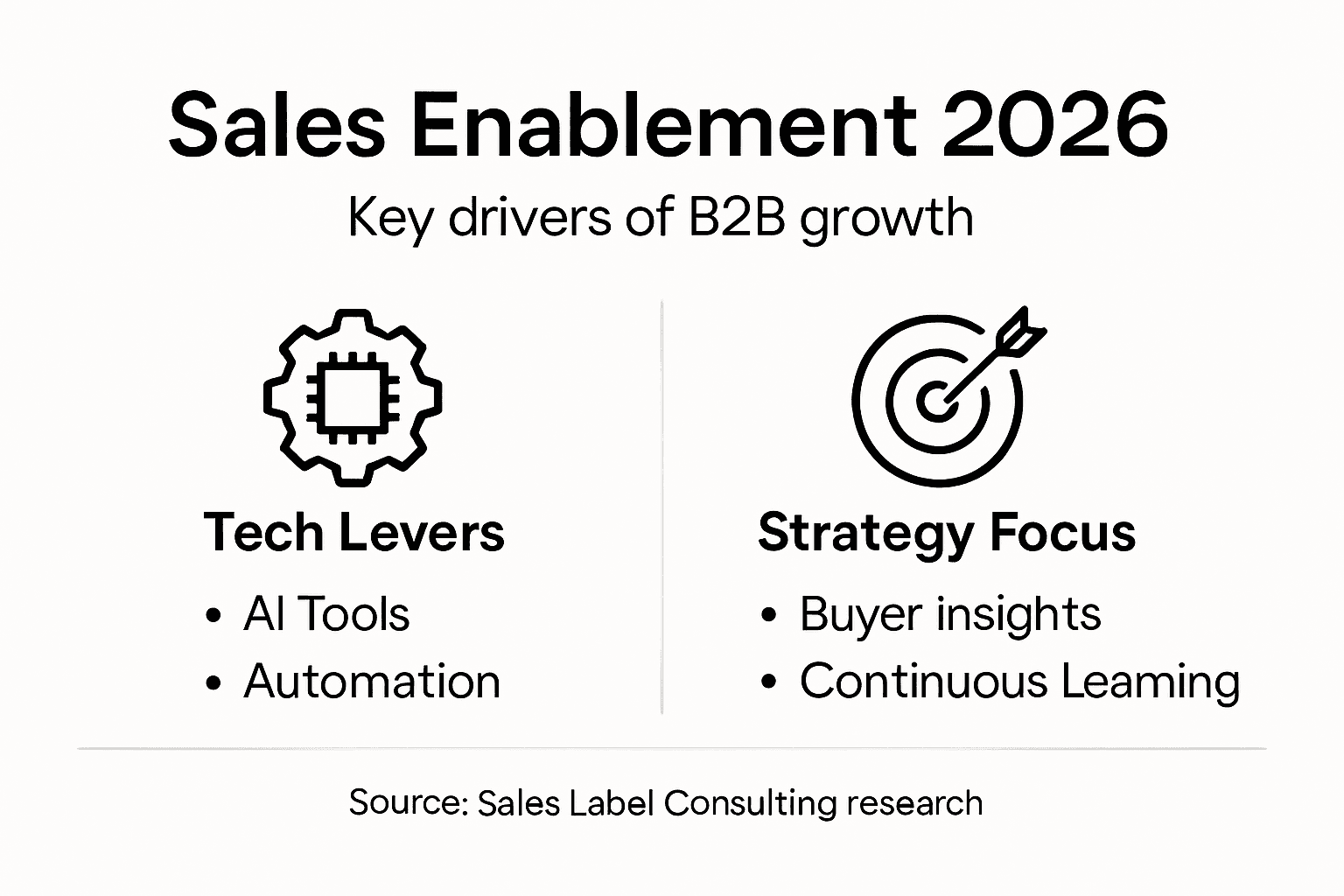
The landscape of B2B sales is experiencing a profound transformation driven by emerging technologies that are fundamentally redesigning how sales teams operate. Generative AI technologies are at the forefront of this revolutionary shift, enabling unprecedented levels of automation, personalization, and strategic intelligence.
Key technological innovations driving this transformation include:
These emerging technologies are not merely incremental improvements but represent a fundamental reimagining of sales processes. By leveraging machine learning algorithms and sophisticated data processing capabilities, sales teams can now generate highly personalized content, predict customer needs with remarkable accuracy, and streamline complex sales workflows with minimal human intervention.
The integration of these technologies enables sales professionals to transcend traditional limitations, focusing more on strategic relationship building and complex problem-solving while intelligent systems handle routine tasks, lead qualification, and initial customer interactions. This shift represents a new paradigm where technology amplifies human capabilities rather than replacing them.
Here’s a concise summary of how emerging sales enablement technologies impact business outcomes:
| Technology Category | Main Business Impact | Example Benefit |
|---|---|---|
| Generative AI | Enhanced personalization | Automated creation of tailored pitches |
| Predictive Analytics | Improved sales forecasting | Accurate identification of hot leads |
| Conversational AI | Faster customer engagement | Instant, relevant chat support |
| Workflow Automation | Increased operational efficiency | Reduced manual data entry |
| Personalization Engines | Deeper buyer relationships | Custom proposals for buying teams |
Pro tip: Continuously invest in upskilling your sales team to effectively leverage and collaborate with emerging AI technologies, ensuring they remain adaptive and technologically fluent.
The B2B purchasing landscape has undergone a radical transformation, with digital-first buyer behaviors fundamentally reshaping how companies approach sales and engagement. Modern buyers are increasingly autonomous, technologically sophisticated, and demand personalized, seamless purchasing experiences that align with their complex organizational needs.
Key characteristics of the emerging B2B buyer profile include:
Today’s buying committees have evolved from traditional hierarchical structures to more dynamic, cross-functional teams that leverage collective intelligence. These sophisticated decision-making units demand comprehensive, nuanced information that addresses multiple stakeholder perspectives, technical requirements, and strategic objectives.

The implications for sales teams are profound. Organizations must redesign their engagement strategies to provide rich, contextual content, leverage advanced digital communication tools, and create adaptive sales approaches that respect the buyer’s increasing autonomy while delivering exceptional value. Success now hinges on understanding and anticipating complex buyer journeys, not just executing transactional sales processes.
Pro tip: Develop adaptive content strategies that can dynamically adjust to different stakeholder roles and information needs within complex buying committees.
The future of sales enablement is being radically transformed by advanced AI-driven automation strategies that are redefining how sales teams operate, learn, and engage with potential customers. These intelligent systems are moving far beyond simple task automation, creating dynamic, responsive environments that adapt in real-time to complex sales scenarios.
Key automation technologies revolutionizing sales enablement include:
Modern sales enablement automation transforms traditional linear processes into intelligent, interconnected ecosystems. By leveraging sophisticated machine learning models, organizations can now generate hyper-personalized training materials, anticipate sales representative needs, and provide just-in-time resources that dramatically enhance individual and team performance.
The strategic implementation of automation technologies enables sales teams to shift from reactive, manual processes to proactive, data-driven engagement models. This transformation allows sales professionals to focus on high-value strategic interactions while intelligent systems handle routine tasks, lead qualification, and comprehensive performance analysis.
The table below compares key sales enablement automation strategies and their advantages:
| Automation Strategy | Core Function | Strategic Advantage |
|---|---|---|
| Predictive Lead Scoring | Rank prospects by potential | Focuses effort on top opportunities |
| NLP for Personalization | Customizes outreach content | Boosts relevance of communication |
| Workflow Routing | Automates task assignments | Speeds internal collaboration |
| Machine Learning Tools | Optimize team performance | Increases individual productivity |
| Recommendation Engines | Suggest next best actions | Improves conversion rates |
Pro tip: Implement a phased automation strategy that incrementally introduces AI technologies, ensuring continuous learning and adaptation across your sales ecosystem.
The emerging landscape of business compliance is becoming increasingly complex, with advanced risk management strategies demanding unprecedented levels of strategic sophistication and technological integration. Organizations must navigate a rapidly evolving regulatory environment that combines technological innovation with stringent legal frameworks.
Primary compliance challenges for B2B organizations in 2026 include:
The convergence of technological disruption and regulatory complexity requires organizations to develop robust, adaptive governance frameworks. Companies must invest in sophisticated data analytics, AI-powered compliance monitoring systems, and comprehensive risk assessment methodologies that can dynamically respond to emerging threats and regulatory shifts.
Traditional compliance approaches are becoming obsolete as geopolitical tensions, technological advancements, and global economic shifts create increasingly interconnected risk landscapes. Successful organizations will leverage unified data platforms, advanced machine learning algorithms, and proactive risk management strategies to maintain legal and ethical standards while preserving organizational agility.
Pro tip: Develop a centralized, AI-enhanced compliance intelligence platform that provides real-time regulatory insights and automated risk assessment capabilities.
Successful sales enablement requires strategic precision, and understanding common implementation pitfalls is crucial for organizations seeking transformative results. Navigating these challenges demands a proactive, holistic approach that addresses systemic organizational dynamics.
Most critical mistakes organizations encounter include:
Implementation failures often stem from treating sales enablement as a standalone initiative rather than an integrated, comprehensive organizational strategy. Successful programs recognize that enablement is not about introducing tools or training, but about creating a sophisticated ecosystem that empowers sales professionals to perform at their highest potential.
Companies must develop robust, flexible frameworks that prioritize continuous feedback, data-driven insights, and adaptive learning mechanisms. This approach requires breaking down traditional silos between sales, marketing, and training departments, fostering a collaborative environment that views enablement as a dynamic, evolving discipline rather than a static set of procedures.
Pro tip: Create a cross-functional enablement task force with representatives from sales, marketing, and training to ensure holistic strategy development and implementation.
The article highlights critical challenges B2B technology companies face like adapting to AI-powered sales automation, managing complex buyer behaviors, and ensuring compliance in a fast-evolving market. If you are struggling with aligning sales enablement strategies across departments, delivering personalized buyer experiences, or integrating advanced predictive analytics then you are not alone. These pain points require more than isolated tools—they call for a comprehensive sales enablement ecosystem built on deep expertise in sales enablement, audit, and demand generation.
At Sales Label Consulting, we specialize in transforming your sales operations into predictable, efficient growth engines. We help Head of Sales and RevOps managers navigate the complexities of emerging AI technologies, buyer expectations, and compliance demands through tailored consulting and strategic frameworks. Our approach empowers your teams with clear performance insights and continuous learning pathways to stay ahead of 2026’s demands.
Elevate your sales enablement strategy today.
Discover how to create an integrated, proactive sales environment that drives exceptional results by partnering with experts who understand the future of sales. Visit Sales Label Consulting now to start your tailored sales transformation journey. Learn more about our Sales Enablement and Sales Audit solutions designed to help you confidently overcome the most pressing sales challenges.
Sales enablement is a strategic approach to empower sales teams by coordinating marketing content, training resources, performance metrics, and technology. It is crucial for B2B growth as it helps sales professionals engage effectively with complex buyer journeys, fostering informed decision-making and proactive relationships.
Emerging technologies such as generative AI are enhancing sales enablement by automating routine tasks, personalizing buyer interactions, and providing advanced predictive analytics. These technologies allow sales teams to focus more on strategic relationships and complex problem-solving rather than mundane processes.
The modern B2B buyer is characterized by extensive independent research, a preference for self-service digital platforms, and a demand for hyper-personalized content. They prioritize transparent, value-driven interactions and often collaborate within multi-stakeholder decision-making teams.
Organizations should avoid mistakes such as lacking clear strategic alignment, poor cross-departmental communication, inadequate content management, and neglecting continuous learning. Treating sales enablement as an integrated initiative rather than a standalone effort is essential for success.
Subscribe to our Insights: Expert productivity tips in your inbox
You'll receive 1-3 emails per month. Your data stays private, always.

CEO & Co-Founder with Sales Label Consulting

Book a free consultation call
September 24, 2026 - 8 min read
Read article Read articleSeptember 23, 2026 - 8 min read
Read article Read articleSeptember 22, 2026 - 11 min read
Read article Read articleSeptember 21, 2026 - 8 min read
Read article Read article