
Sales Operations Defined: Driving Process Precision in Tech
Sales Operations managers across European tech companies constantly face the challenge of turning scattered data and routine tasks into actionable business advantage. The push to optimize processes and achieve reliable forecasting is stronger than ever as competition increases. Discover how modern Sales Operations teams harness core concepts like process optimization, analytics strategy, and technology management to unlock predictable revenue and create a more resilient sales organization.
| Point | Details |
|---|---|
| Sales Operations as a Strategic Force | Modern sales operations enhance business performance by supporting various functional areas and focusing on essential non-client activities such as forecasting and strategic planning. |
| Role of Technology Integration | Effective sales operations leverage advanced tools like CRM systems and AI analytics to streamline workflows, improve accuracy, and enable data-driven decisions. |
| Critical Roles in Sales Operations | Key positions, such as Sales Operations Analysts and Managers, play distinct roles in ensuring data integrity and process efficiency that drive organizational success. |
| Importance of Risk Management | Proactively identifying and mitigating risks related to technology, data quality, and organizational alignment is essential for maintaining effective sales operations. |
Sales operations has transformed from a purely administrative function into a strategic powerhouse driving business performance. Gartner research reveals that modern sales operations now supports five or more enterprise groups, dedicating significant resources to critical non-client activities like forecasting, strategy development, and organizational alignment.
At its core, sales operations encompasses several critical responsibilities that enable sales teams to operate with maximum efficiency:
The evolution of sales operations goes beyond traditional data analysis. Modern sales operations professionals now play a crucial role in bridging strategy, technology, and human performance. They are responsible for creating scalable systems that transform raw sales potential into predictable revenue generation.
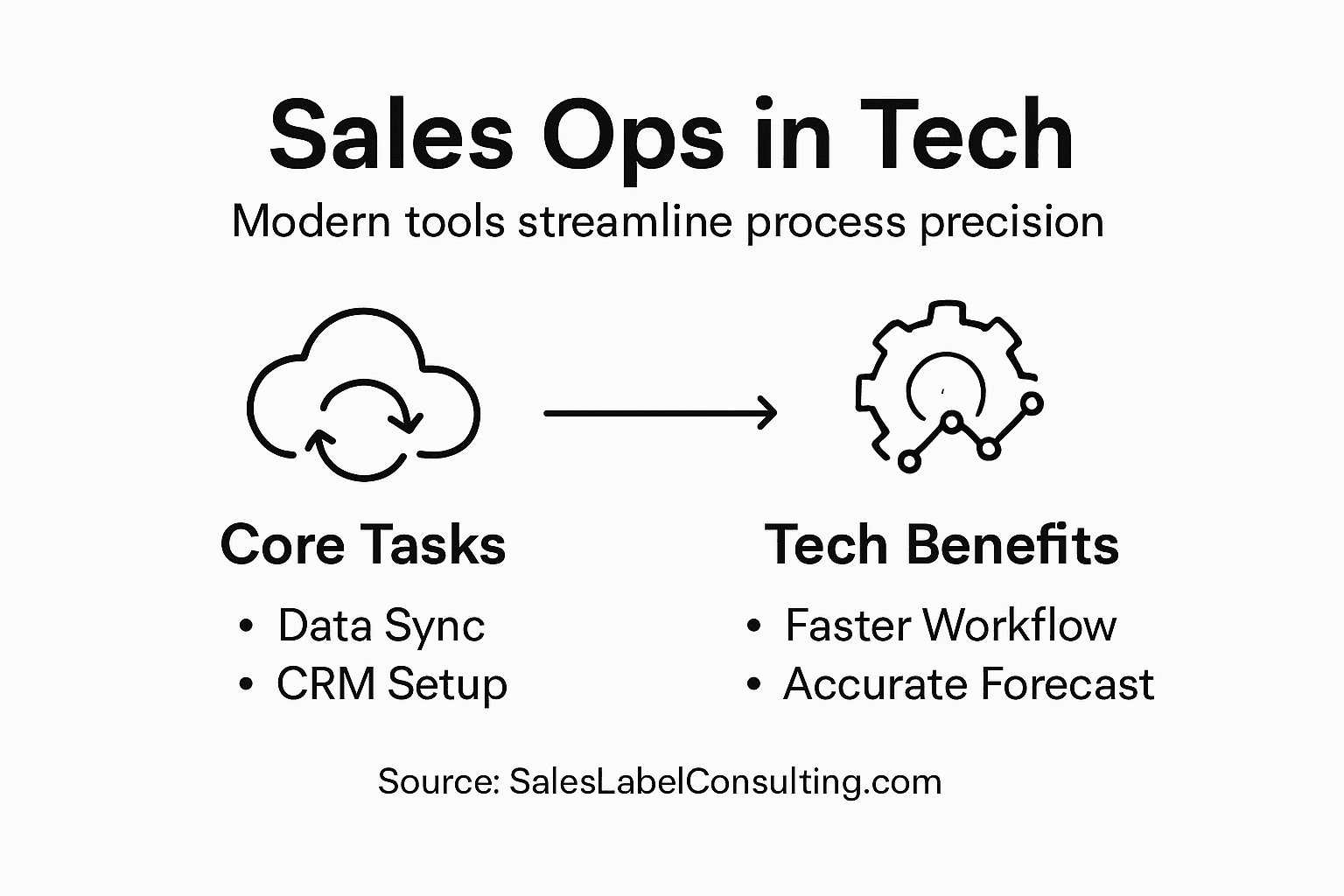
Technology integration has become a hallmark of contemporary sales operations. By selecting, implementing, and managing advanced CRM systems, sales intelligence platforms, and performance tracking tools, these professionals create a technological infrastructure that empowers sales teams to work smarter, not just harder.
Pro tip: Invest in continuous training for your sales operations team to ensure they stay updated on emerging technologies and strategic methodologies that can drive organizational performance.
Sales operations encompasses a diverse range of critical processes that vary significantly across different organizational contexts. Gartner research highlights that these processes typically include pipeline management, revenue forecasting, sales compensation planning, and integrated revenue operations strategies.
The core process types in sales operations can be categorized into several key domains:
Sales and Operations Planning (S&OP) represents a sophisticated approach to cross-functional coordination. Integrative planning processes aim to balance supply and demand by synchronizing efforts across sales, marketing, production, and finance departments.
Modern sales operations teams recognize that process variations are essential. Companies must adapt their approaches based on unique organizational structures, industry dynamics, and strategic objectives. This means customizing processes to fit specific business models, whether in technology, manufacturing, or service-based sectors.
Pro tip: Regularly audit and recalibrate your sales operations processes to ensure they remain aligned with changing business goals and market conditions.
Sales technology is undergoing a dramatic transformation, with AI revolutionizing sales forecasting through intelligent data integration and predictive capabilities. These advanced systems can detect complex patterns that traditional methods consistently missed, dramatically improving revenue predictability and operational efficiency.
The key innovations in sales operations automation include:
AI-driven sales technologies are reshaping how sales teams operate by enabling more strategic interactions. By handling complex data management and predictive modeling, these tools allow sales professionals to focus on high-value relationship-building and strategic decision-making.

Modern sales operations teams are rapidly adopting these technologies to create more agile, responsive, and intelligent sales ecosystems. The integration of machine learning, predictive analytics, and automated workflows is transforming sales from a reactive to a proactively strategic function.
Here is a summary of how automation transforms key sales operations areas:
| Area Transformed | Traditional Approach | Automated Advantage |
|---|---|---|
| Forecasting | Manual spreadsheets, lagging data | Real-time AI analysis, higher accuracy |
| Analytics | Historic data, surface insights | Predictive trends, deeper benchmarks |
| Workflow Management | Repetitive manual tasks | Automatic routing, less admin burden |
Pro tip: Implement a phased approach to technology adoption, starting with pilot programs that demonstrate clear value and scalability.
Sales operations encompasses a complex ecosystem of strategic roles that drive organizational performance. Advanced research highlights the critical importance of professionals who transform data into actionable business strategies.
The key roles within sales operations include:
Each role contributes unique capabilities to the sales ecosystem. Analysts provide the foundational data insights, managers design and refine processes, and directors craft overarching strategic frameworks that transform raw information into competitive advantage.
The most effective sales operations teams cultivate a collaborative environment where these roles work synergistically. They integrate advanced analytics, technology platforms, and strategic thinking to create a holistic approach to sales performance and organizational growth.
Compare typical sales operations roles and their primary business value:
| Role | Main Focus | Business Value |
|---|---|---|
| Sales Operations Analyst | Data accuracy & reporting | Insightful, fast decision support |
| Sales Ops Manager | Process & tool integration | Streamlined, efficient workflows |
| Director of Sales Ops | Strategic and revenue vision | Organization-wide alignment |
Pro tip: Develop clear communication protocols and shared metrics across sales operations roles to ensure seamless collaboration and unified organizational objectives.
Sales operations integration demands strategic precision to avoid catastrophic errors. Data integration challenges can result in significant financial and operational setbacks that undermine organizational performance.
The most critical risks in sales operations include:
Sales and Operations Planning challenges reveal complex interdependencies that can derail organizational effectiveness. These risks emerge from disparate systems, inconsistent data quality, and communication breakdowns across different functional teams.
Successful sales operations teams proactively identify and mitigate these risks by implementing robust integration strategies, standardizing processes, and creating transparent communication channels that enable cross-functional collaboration.
Pro tip: Conduct quarterly comprehensive audits of your sales operations technology stack to identify potential integration gaps and alignment challenges before they become critical.
The article highlights the challenges of aligning technology, processes, and strategy to achieve predictable revenue growth and operational efficiency in sales operations. Many sales leaders struggle with data quality issues, technology misalignment, and forecasting inaccuracies that hinder their ability to drive scalable and error-free results. At Sales Label Consulting, we understand these pain points deeply. Our expertise in Sales Enablement, Sales Audit, and Demand Generation is designed specifically to help RevOps, Heads of Sales, and VPs of Sales overcome these hurdles by crafting tailored, entrepreneurial tech solutions that create process precision and boost predictable performance.
Explore how our consulting services can transform your sales operations by streamlining your workflows, enhancing data integrity, and integrating advanced technologies that empower your team to focus on strategic growth. Visit Sales Label Consulting to learn more about our proven approach. For immediate guidance, discover how a comprehensive Sales Audit can reveal hidden gaps impacting your sales effectiveness.
Ready to transform your sales operations and build a foundation for consistent revenue?
Take the first step toward flawless sales execution with Sales Label Consulting. Visit https://saleslabelconsulting.com now to schedule your consultation and start delivering predictable, error-free results today.
Sales operations primarily includes process optimization, analytics strategy, technology management, performance tracking, and strategic planning to support overall business objectives.
Technology has integrated advanced CRM systems and sales intelligence platforms, allowing sales operations teams to create a robust tech stack that improves efficiency and enhances data-driven decision making.
Key processes include pipeline management, revenue forecasting, sales compensation planning, and strategic planning tailored to organizational needs.
Automation improves sales operations by enhancing forecasting accuracy, streamlining workflow processes, and enabling real-time data analysis, which increases operational efficiency and allows teams to focus on strategic interactions.
Subscribe to our Insights: Expert productivity tips in your inbox
You'll receive 1-3 emails per month. Your data stays private, always.

CRO & Co-Founder with Sales Label Consulting

Let's book a free consultation call
October 15, 2026 - 9 min read
Read article Read articleOctober 14, 2026 - 7 min read
Read article Read articleOctober 13, 2026 - 10 min read
Read article Read articleOctober 12, 2026 - 11 min read
Read article Read article