
Step by Step Sales Training for Tech Teams: Boost Results
Sales leaders across the European tech scene often juggle shifting targets and unclear expectations. Without a unified framework, even strong teams risk wasted effort and missed opportunities. This guide spotlights how to define sales goals, build a solid structure, and craft training that directly addresses your challenges. Expect actionable steps tailored for mid-sized firms seeking better alignment and measurable outcomes. By focusing on specific and measurable objectives, you can transform team performance and cut process inefficiencies.
| Key Point | Explanation |
|---|---|
| 1. Define Clear Sales Goals | Establish specific, measurable, achievable, relevant, and time-bound (SMART) goals to guide your sales team effectively. |
| 2. Implement Tailored Sales Training | Create personalized training modules that address individual skill gaps and enhance team performance for tech sales. |
| 3. Enhance Interactive Onboarding | Design engaging, structured onboarding experiences that promote integration and align new hires with company culture. |
| 4. Monitor Team Performance Continuously | Use key performance indicators and real-time dashboards to track progress, enabling ongoing optimization and improvement. |
| 5. Validate Training Effectiveness with Data | Analyze post-training performance metrics to assess the true impact of your sales training initiatives on business outcomes. |
Defining clear sales goals and organizational structure is fundamental to creating a high-performing tech sales team. This critical step transforms abstract business objectives into actionable, measurable targets that align your entire sales organization.
When establishing sales goals, focus on creating specific and measurable objectives that motivate your team and provide clear direction. These goals should follow the SMART framework: Specific, Measurable, Achievable, Relevant, and Time-bound. Here are key components to consider:
Here’s a quick summary of the SMART framework for setting sales goals:
| SMART Criterion | Description | Business Impact |
|---|---|---|
| Specific | Clearly defines objectives | Aligns team focus and resources |
| Measurable | Can be tracked with data | Enables performance monitoring |
| Achievable | Realistic and attainable | Boosts motivation and engagement |
| Relevant | Matches business priorities | Drives organizational success |
| Time-bound | Has deadlines or milestones | Promotes accountability and progress |
To develop an effective sales structure, you’ll want to strategically balance inside and outside sales roles while clarifying responsibilities. This means creating a framework that supports both individual performance and collaborative team dynamics. Your structure should address:
The most successful sales organizations create flexible structures that adapt to changing market conditions while maintaining clear accountability.
Consider implementing a hybrid sales model that combines specialized roles with cross-functional collaboration. This approach ensures that each team member understands their specific responsibilities while maintaining the agility to support overall organizational objectives.
Pro tip: Conduct quarterly reviews of your sales goals and structure to ensure continued alignment with evolving business strategies and market dynamics.
Building tailored sales training modules is a strategic approach to developing high-performance tech sales teams by creating personalized learning experiences that address individual skill gaps and organizational needs. This step involves designing comprehensive training programs that go beyond one-size-fits-all approaches.
Personalized training leverages data and adaptive technologies to customize content and learning pace for each sales representative. The key is to develop modules that are targeted, engaging, and directly applicable to your team’s specific challenges.
Start by mapping out the critical skills and knowledge areas your tech sales team needs to master:
Create your training modules using a structured approach:
Effective sales training is not about delivering information, but transforming individual capabilities and team performance.
Consider using a mix of training formats to maximize engagement and knowledge retention. This could include video tutorials, interactive workshops, role-playing scenarios, micro-learning content, and peer-to-peer coaching sessions. The goal is to create a dynamic learning environment that adapts to each team member’s unique learning style and professional development needs.
This table compares popular sales training formats and their benefits:
| Training Format | Engagement Level | Ideal Use Case |
|---|---|---|
| Video Tutorials | Moderate | Product demonstrations |
| Interactive Workshops | High | Skill development sessions |
| Role-Playing Scenarios | High | Practicing customer interactions |
| Micro-Learning Content | High | Quick skill refreshers |
| Peer Coaching | Moderate | Collaborative knowledge exchange |
Pro tip: Implement a quarterly review process to continuously refine and update your training modules based on team performance data and evolving market requirements.
Delivering an interactive team onboarding experience transforms how new sales team members integrate into your organization, setting the foundation for long-term success and productivity. This critical process goes beyond traditional orientation by creating an engaging, comprehensive introduction to your company’s culture, processes, and expectations.

Microlearning approaches break down complex information into digestible modules that help new employees absorb knowledge effectively. The goal is to design an onboarding experience that is both comprehensive and approachable, ensuring new team members feel supported and empowered from day one.
Key components of an effective interactive onboarding process include:
Implement your onboarding strategy through these strategic steps:
Successful onboarding is about creating connection, not just transferring information.
Consider incorporating various interactive elements like gamified learning modules, virtual team challenges, and real-time progress tracking. These techniques help new team members actively engage with the material while building connections with their colleagues and understanding the broader organizational context.
Pro tip: Develop a flexible onboarding framework that can be quickly customized for different roles while maintaining a consistent core learning experience.
Monitoring sales team performance is a critical ongoing process that transforms raw data into actionable insights, enabling continuous improvement and strategic decision-making. This step moves beyond simple tracking to create a dynamic feedback system that drives individual and team growth.
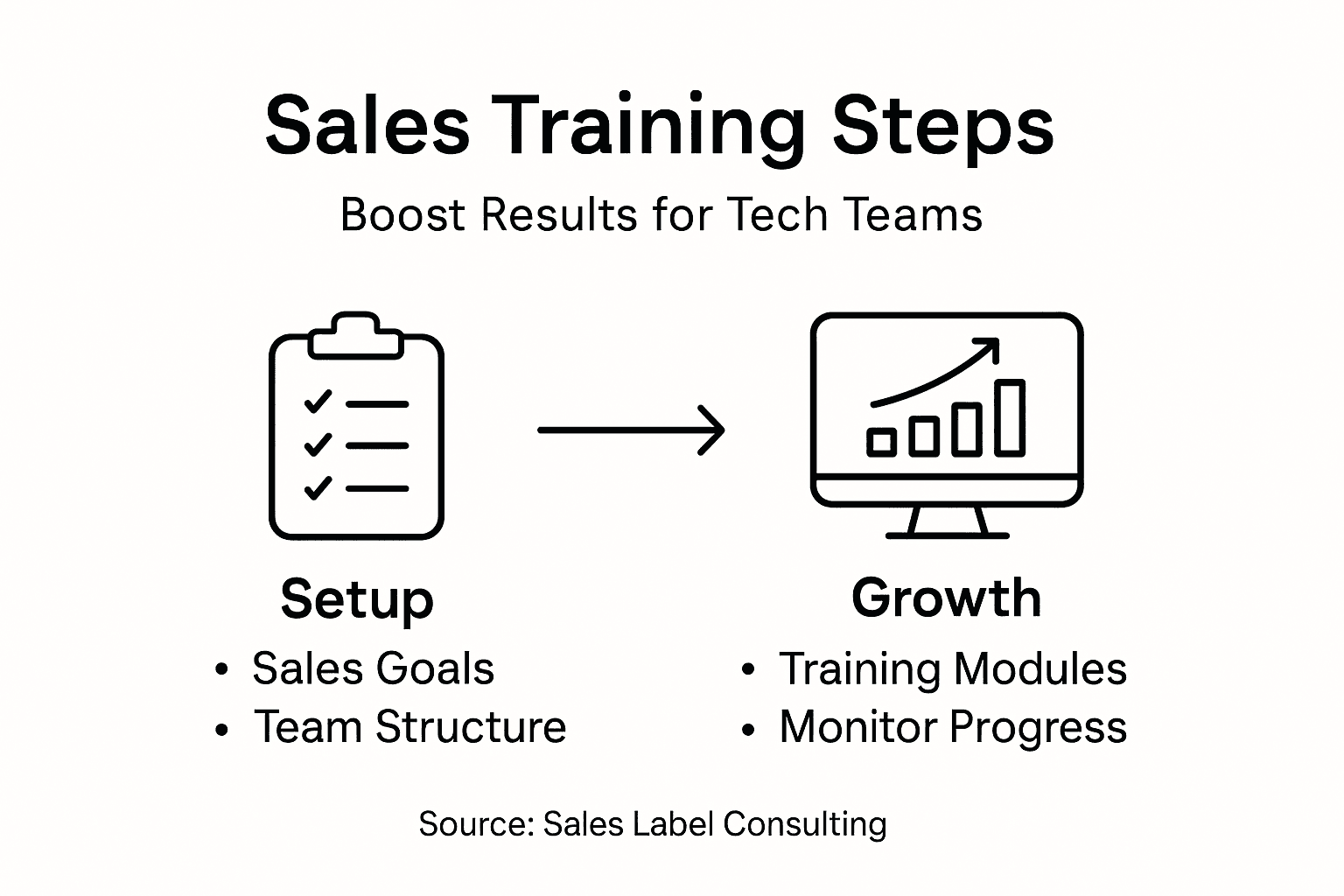
Key performance indicators provide comprehensive insights into sales team effectiveness and areas requiring strategic intervention. The goal is to develop a robust monitoring framework that turns performance data into meaningful coaching and optimization opportunities.
Essential performance metrics to track include:
Implement a comprehensive performance monitoring strategy through these steps:
Performance optimization is a continuous journey, not a destination.
Utilize advanced analytics tools that provide granular insights into team and individual performance. These tools should offer visual representations of data, allowing quick identification of trends, strengths, and potential improvement areas. Combine quantitative metrics with qualitative feedback to create a holistic performance assessment approach.
Pro tip: Design performance dashboards that balance objective metrics with contextual insights, enabling nuanced understanding beyond raw numbers.
Validating the effectiveness of your sales training goes beyond intuitive assessments, requiring a rigorous, data-driven approach that quantifiably demonstrates the impact of your investment. This critical step transforms training from an abstract exercise into a strategic business initiative with measurable outcomes.
New evaluation metrics analyze comprehensive sales outcomes by examining revenue contributions, salesperson performance, and training investment returns. The goal is to develop a systematic method for tracking and interpreting the tangible results of your sales training program.
Key data points to track and analyze include:
Implement a comprehensive validation strategy through these steps:
True performance validation requires looking beyond surface-level numbers to understand the deeper impact of training.
Utilize advanced analytics platforms that can provide nuanced insights into training effectiveness. These tools should enable you to track individual and team performance trajectories, correlating specific training interventions with measurable business outcomes. By combining quantitative metrics with qualitative feedback, you’ll create a holistic understanding of your training program’s real-world impact.
Pro tip: Design a dynamic reporting framework that continuously evolves with your team’s performance, allowing for real-time training optimization.
Unlock the true potential of your sales team by addressing the challenges of defining clear sales goals, building tailored training, and validating results with real sales data. Many tech sales leaders struggle with creating flexible sales structures that motivate and measure progress effectively. At Sales Label Consulting, we understand these pain points and offer proven consulting solutions in Sales Enablement, Sales Audit, and Demand Generation designed to boost team performance and deliver predictable, error-free outcomes.
Partnering with experts who bring deep entrepreneurial tech experience means you can confidently design personalized training modules, implement interactive onboarding, and optimize performance with data-driven insights. Visit Sales Label Consulting to explore how our consulting services transform your sales strategy with hands-on guidance and actionable results.
Ready to overcome sales team challenges and accelerate revenue growth now
Discover how your sales team can thrive by partnering with Sales Label Consulting today. Take the first step toward measurable sales excellence by connecting with us at Sales Label Consulting. Enhance your sales enablement and audit processes with tailored expert support by visiting Sales Enablement Consulting. Start building a high-performance tech sales team right away.
Defining clear sales goals involves following the SMART framework: Specific, Measurable, Achievable, Relevant, and Time-bound. Create measurable objectives, such as quarterly sales targets or individual representative goals, to give your team clarity and direction. Begin this process by outlining annual revenue targets and individual metrics within the first month.
Effective training formats include interactive workshops, role-playing scenarios, and micro-learning content. These formats maximize engagement and help team members apply their skills in real situations. Start by implementing at least two different formats within the first quarter to assess what resonates best with your team.
Delivering onboarding should focus on creating an interactive experience that provides essential company knowledge and support. Use personalized welcome packages, structured learning paths, and mentorship programs to foster a sense of belonging. Aim to complete the onboarding process within the first two weeks to set the foundation for success.
Focus on key performance metrics such as sales revenue generation, conversion rates, and customer acquisition costs. Regularly track these metrics to identify areas for improvement and provide necessary coaching. Establish a monthly review process to assess overall team performance and make adjustments as needed.
Validate the effectiveness of your sales training by tracking key performance data like revenue growth and individual performance before and after training sessions. Use comparative analysis to evaluate the impact of your training on business outcomes. Aim to conduct this validation at least quarterly to ensure continuous improvement.
To optimize sales team performance, establish clear performance benchmarks and utilize real-time tracking tools. Implement regular performance reviews and create personalized improvement plans for team members. Make it a priority to review these plans every month to adjust based on evolving needs.
Subscribe to our Insights: Expert productivity tips in your inbox
You'll receive 1-3 emails per month. Your data stays private, always.

CEO & Co-Founder with Sales Label Consulting

Book a free consultation
October 15, 2026 - 9 min read
Read article Read articleOctober 14, 2026 - 7 min read
Read article Read articleOctober 13, 2026 - 10 min read
Read article Read articleOctober 12, 2026 - 11 min read
Read article Read article