Pressure mounts on every Sales Executive and VP of Sales as they navigate the fast pace of European tech markets. Keeping sales teams aligned and consistently performing is increasingly complex with rapid shifts in customer expectations and business goals. By focusing on sales management as a strategic discipline, this guide offers actionable structures and responsibilities that help drive predictable outcomes, enhance team capabilities, and sustain growth despite uncertainty.
| Point | Details |
|---|---|
| Sales Management as a Strategic Discipline | Focuses on coordinating and optimizing sales operations to drive growth through systematic planning, team leadership, and performance management. |
| Sales Structures in Technology | Tech companies utilize flexible sales management structures including functional, geographic, and hybrid models to meet market demands. |
| Core Responsibilities of Sales Managers | Involves strategic planning, team development, performance management, and ensuring effective cross-functional collaboration to enhance sales performance. |
| Proactive Risk Mitigation | Effective sales management requires identifying potential pitfalls and implementing strategies for continuous improvement and organizational resilience. |
Sales management represents a strategic discipline focused on orchestrating and optimizing a company’s sales operations to drive consistent business growth. At its core, sales management encompasses the systematic planning, leadership, and control of sales team activities to achieve organizational objectives.
The discipline involves several critical components that work together to create a high-performing sales ecosystem:
Research from strategic sales and sales management perspectives highlights that effective sales management goes beyond traditional transactional approaches. Modern sales management requires a holistic view that integrates customer relationship marketing, organizational commitment, and adaptive leadership strategies.
The fundamental objectives of sales management include:
Sales management is not just about monitoring numbers, but about creating a strategic framework that transforms individual sales efforts into coordinated organizational success.
Performance Control plays a pivotal role in sales management. This involves implementing both behavioral and outcome-based control mechanisms that motivate salespeople while aligning their efforts with organizational goals. Incentive design becomes crucial in shaping sales behaviors and driving desired outcomes.
Pro tip: Develop a comprehensive sales management dashboard that tracks both leading and lagging indicators to gain real-time insights into team performance and strategic alignment.
Technology companies have developed sophisticated sales management structures that reflect their unique business dynamics and strategic objectives. Sales team organizational models demonstrate remarkable adaptability, allowing businesses to optimize their sales approach based on specific market demands and growth strategies.
The most common sales management structures in tech environments include:
In technology services companies, sales roles typically fall into two primary categories:
Use this comparison table to understand the difference between Hunter and Farmer roles in tech sales:
| Role | Primary Objective | Activities | Key Strength |
|---|---|---|---|
| Hunter | Acquire new clients | Prospecting, pitching | Aggressive growth |
| Farmer | Grow existing accounts | Relationship building | Retention, upselling |
Modern tech sales structures prioritize adaptability, enabling companies to pivot quickly in response to evolving market conditions and technological innovations.
The evolution from founder-led sales to professional sales teams represents a critical transformation for growing tech organizations. Tech sales organizational strategies often involve creating cross-functional account teams that blend technical expertise with sales capabilities, ensuring comprehensive customer engagement.
Successful sales management structures in technology require continuous refinement, balancing specialized roles with collaborative team dynamics. The goal is to create an agile framework that supports consistent revenue generation while maintaining high-quality customer interactions.
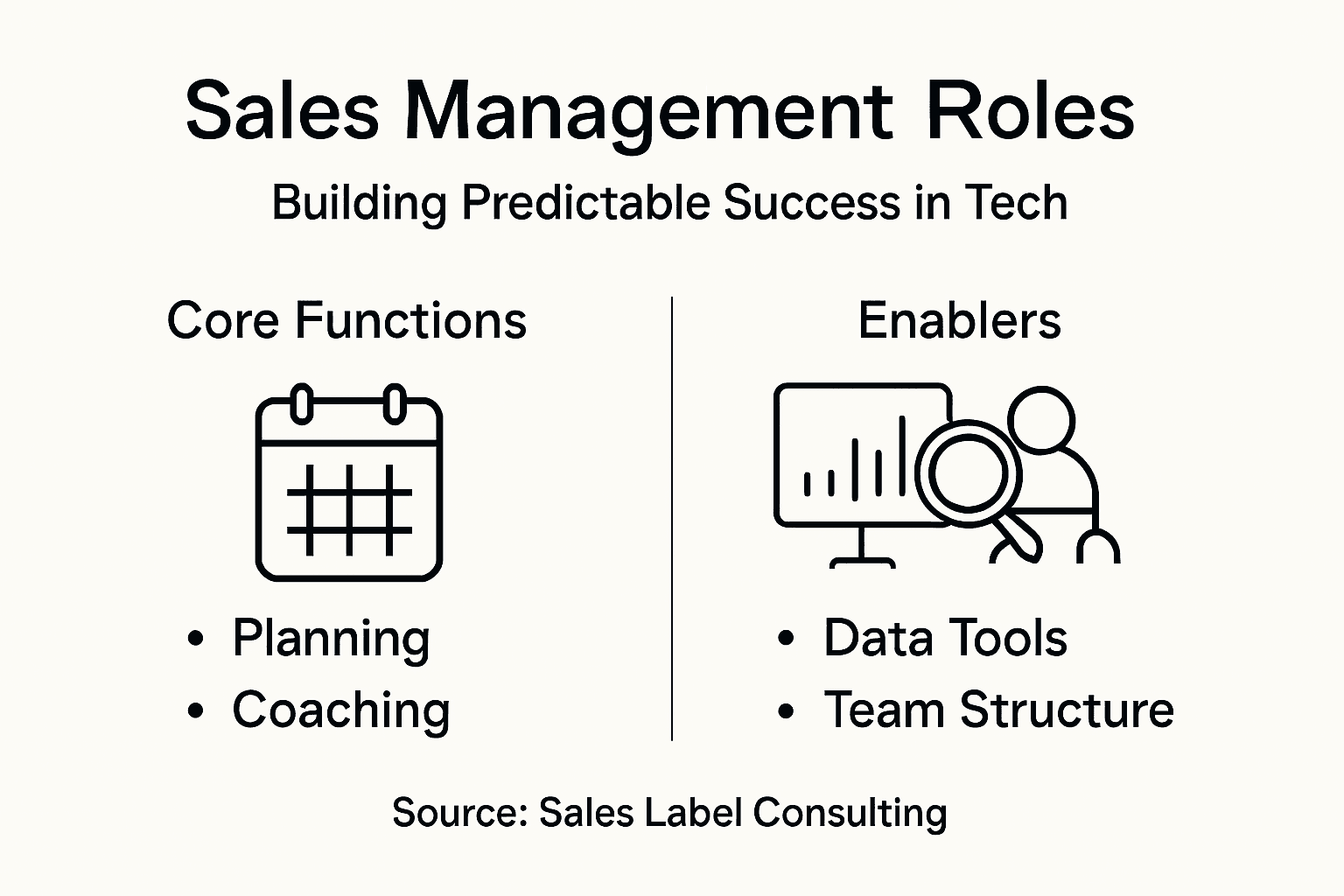
Here’s a summary of the main sales management structures used by technology companies:
| Structure Type | Main Focus | Typical Roles Included | Business Benefit |
|---|---|---|---|
| Functional | Specialized skill areas | SDRs, Account Execs, Managers | Deep expertise, efficient tasks |
| Geographic | Regional market segmentation | Regional Sales Teams | Custom local strategies |
| Product-Based | Individual product lines | Product Specialists, Sales Teams | Targeted product focus |
| Market-Based | Customer type/industry verticals | Industry Account Teams | Personalization for segments |
| Hybrid | Combined approaches | Mixed Roles | Flexible, scalable structure |
Pro tip: Regularly audit your sales team structure and be prepared to redesign your organizational model as your company scales and market dynamics shift.
Sales management daily responsibilities encompass a complex array of strategic and interpersonal activities that drive organizational performance. Sales managers must simultaneously balance multiple critical functions, transforming high-level objectives into actionable team strategies while maintaining consistent operational excellence.
The core responsibilities of sales management typically include:
Key daily practices for effective sales management involve:
Successful sales managers transform raw data and individual efforts into a cohesive, high-performing sales ecosystem.
According to sales management research, effective sales leaders must continuously adapt their approach, balancing data-driven insights with intuitive leadership. This requires a dynamic approach that combines analytical rigor with emotional intelligence, enabling managers to motivate teams and navigate complex business landscapes.
Technology and data analytics have revolutionized sales management practices, providing unprecedented visibility into team performance and customer interactions. Modern sales managers leverage advanced tools to track key performance indicators, predict sales trends, and make strategic decisions with greater precision.

Pro tip: Implement a daily 15-minute team standup meeting to maintain alignment, share crucial insights, and quickly address emerging challenges.
Sales enablement capabilities represent a sophisticated organizational strategy that transcends traditional sales and marketing boundaries. These roles are critical in coordinating resources, processes, and strategic content to support comprehensive sales performance across complex business ecosystems.
Key responsibilities within sales enablement, audit, and demand generation roles include:
The primary functions of these specialized roles involve:
Effective sales enablement transforms disconnected efforts into a synchronized, high-performance sales machine.
Tech sales organizational structures demonstrate that modern sales enablement roles are increasingly complex, requiring a blend of technological proficiency, strategic thinking, and interpersonal skills. These professionals must navigate intricate organizational landscapes, aligning diverse team objectives and enhancing overall sales productivity.
Successful sales enablement professionals act as internal consultants, continuously optimizing the sales ecosystem by providing targeted support, strategic insights, and innovative solutions that drive revenue generation and customer engagement.
Pro tip: Develop a quarterly cross-functional enablement workshop that brings together sales, marketing, and product teams to align strategies and share insights.
Risk mitigation strategies are essential for maintaining sales team performance and organizational resilience. Sales management must proactively identify and address potential threats that could derail revenue generation and team effectiveness.
Common sales management pitfalls include:
Key risk mitigation strategies involve:
Effective risk management transforms potential vulnerabilities into strategic opportunities for growth and improvement.
Sales risk management techniques demonstrate that proactive approaches can significantly reduce organizational vulnerability. This includes diversifying customer bases, enhancing customer experience, and defining clear unique value propositions that differentiate the company from competitors.
Successful sales teams recognize that risk mitigation is an ongoing process requiring continuous adaptation, strategic thinking, and a willingness to challenge existing methodologies. By maintaining flexibility and implementing robust monitoring systems, organizations can create resilient sales strategies that withstand market fluctuations.
Pro tip: Conduct quarterly comprehensive risk assessments that involve input from sales, marketing, product, and customer success teams to identify and preemptively address potential organizational vulnerabilities.
The challenges highlighted in the article “Role of Sales Management Driving Predictable Success” resonate deeply with many sales leaders striving to turn complex sales operations into streamlined, high-performing teams. Whether you are struggling with aligning your sales enablement resources or need clarity in auditing your sales processes to ensure consistent revenue growth, these pain points can stall predictable success. Concepts like strategic performance control, sales audit, and demand generation are critical yet often overwhelming without expert guidance.
At Sales Label Consulting, we specialize in empowering Head of Sales, VP of Sales, and RevOps managers with entrepreneurial experience and proven strategies to tackle these exact challenges. Our bespoke Sales Enablement and Sales Audit services help you build a data-driven sales ecosystem that drives error-free, scalable results. We ensure you are not just tracking metrics but creating actionable insights that transform your sales management from reactive to proactive. Our expertise in demand generation fuels a predictable pipeline so your team can focus on closing deals.
Unlock the full potential of your sales organization today.
Start driving predictable success by partnering with experts who understand the complexities you face. Visit Sales Label Consulting to discover how we can assist you in bridging strategy and execution with confidence.
Ready to make the leap to consistent results

Contact us now to schedule your personalized consultation and elevate your sales management to new heights.
Sales management aims to drive revenue growth, enhance customer relationship quality, develop sales team capabilities, and create predictable sales performance.
Effective sales management includes strategic planning, team leadership, performance management, and resource allocation to optimize sales operations.
Performance control can be implemented through both behavioral and outcome-based control mechanisms, motivating salespeople and aligning their efforts with organizational goals.
Common sales management structures in tech companies include functional, geographic, product-based, market-based, and hybrid structures, each tailored to meet specific business needs and market conditions.
Subscribe to our Insights: Expert productivity tips in your inbox
You'll receive 1-3 emails per month. Your data stays private, always.

CRO & Co-Founder with Sales Label Consulting

Lets book a free consultation call
October 24, 2026 - 8 min read
Read article Read articleOctober 23, 2026 - 10 min read
Read article Read articleOctober 22, 2026 - 9 min read
Read article Read articleOctober 21, 2026 - 9 min read
Read article Read article