
Sales Process Optimization: Boosting Tech Revenue
Complexity in the sales funnel often feels like a moving target for RevOps and Sales Directors at European tech firms. As shifting buyer behaviors and rapid technology adoption redefine what success looks like, streamlining sales process efficiency becomes essential for predictable lead conversion and growth. This article spotlights sales process optimization using proven frameworks, necessary condition analysis, and automation, showing how systematic refinement drives stronger performance and more reliable revenue outcomes.
| Point | Details |
|---|---|
| Sales Process Optimization | A structured approach focuses on systematic improvements through data analysis and technological interventions to enhance sales performance. |
| Critical Metrics | Tracking key performance indicators such as lead conversion rates and customer acquisition costs is essential for success. |
| Technology Integration | Leveraging tools like CRM and AI can transform sales processes, making them more efficient and predictable. |
| Continuous Improvement | Regular audits and feedback loops are necessary to refine processes and adapt strategies to changing market dynamics. |
Sales process optimization represents a strategic approach to systematically improving sales performance through data-driven methodologies and continuous refinement. At its core, this discipline focuses on analyzing and enhancing each stage of the sales funnel to maximize conversion rates and revenue generation.
The concept involves multiple theoretical frameworks for sales improvement, which aim to transform how organizations approach their sales strategies. Key elements of this approach include:
Traditional sales approaches often rely on individual heroics and intuition. Sales process optimization flips this model, replacing unpredictable tactics with structured, measurable strategies. By applying rigorous analytical techniques, tech companies can transform their sales operations from inconsistent performances to predictable revenue generation machines.
Modern sales optimization goes beyond simple number tracking. Necessary Condition Analysis reveals that success requires understanding minimum threshold conditions at each sales stage. This means identifying not just what works, but what absolutely must be present for consistent results.
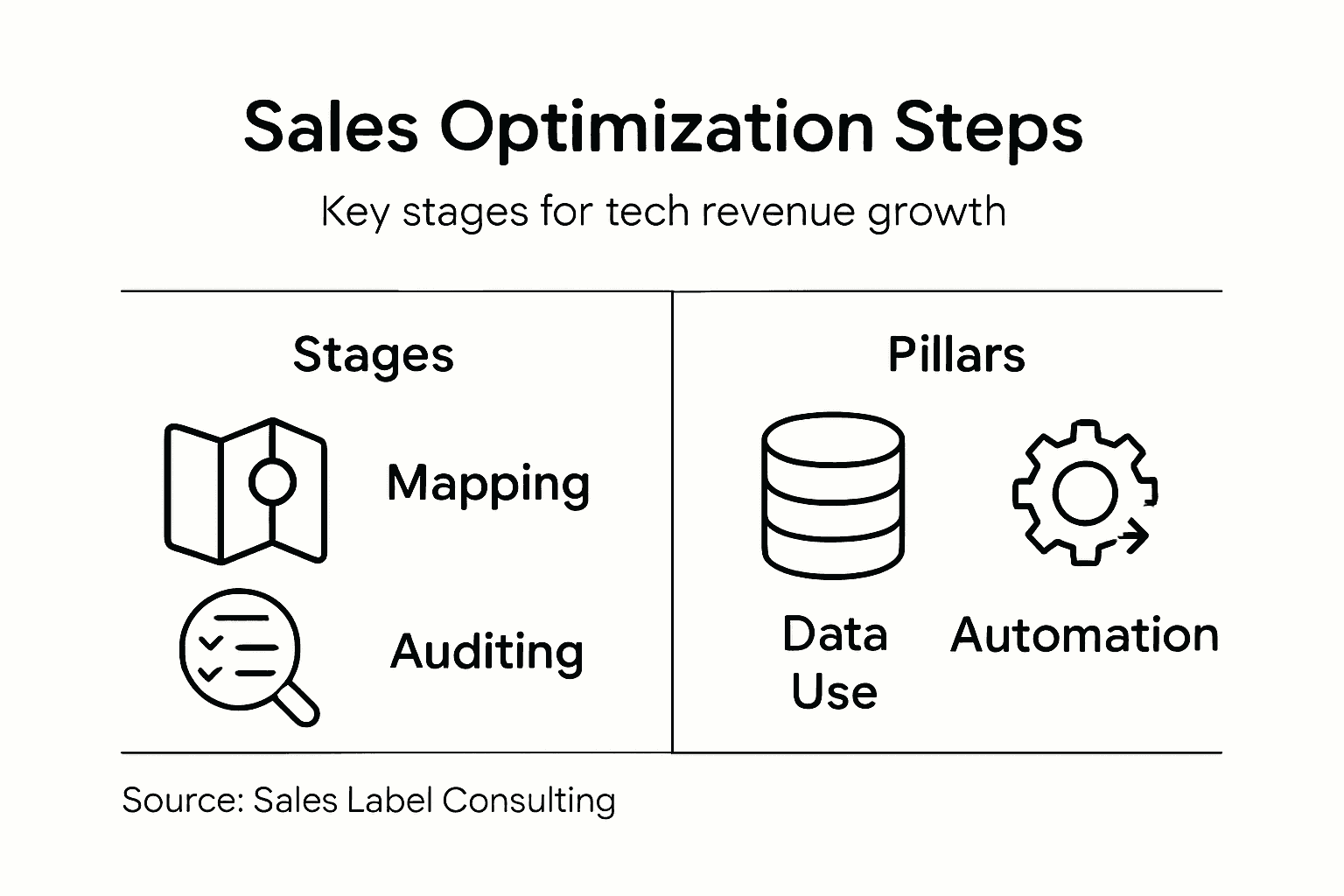
Performance Parameters Matter
Successful sales process optimization depends on tracking critical metrics:
The goal isn’t just incremental improvement, but creating a systematically optimized sales engine that consistently delivers predictable results.
Pro tip: Implement a quarterly sales process audit to identify and eliminate performance bottlenecks before they become systemic challenges.
Tech sales optimization encompasses a comprehensive approach to systematically improving sales performance through strategic technological interventions and data-driven methodologies. Sales technology research reveals multiple sophisticated approaches to transforming sales processes across different technological ecosystems.
The primary stages of tech sales optimization typically include:
Technology-Driven Optimization Types
Modern tech sales optimization leverages several technological approaches:
Each optimization type focuses on reducing manual effort and increasing predictability. Sales funnel optimization frameworks demonstrate that systematic technological interventions can dramatically improve conversion rates and sales efficiency.
Technology transforms sales from an art of individual heroics into a systematic, data-driven science of predictable revenue generation.
Performance Metrics Matter
Successful tech sales optimization requires tracking critical performance indicators:
Pro tip: Implement a quarterly technology audit to ensure your sales optimization tools remain cutting-edge and aligned with evolving market dynamics.
Sales process optimization increasingly depends on three critical interconnected features: strategic data utilization, intelligent automation, and precise buyer alignment. Advanced automation platforms now enable organizations to create dynamic, responsive sales ecosystems that adapt in real-time to complex buyer behaviors.
The core features of modern sales optimization include:
Strategic Automation Components
Technological optimization requires implementing sophisticated automation strategies:
Buyer Alignment Principles
Successful sales optimization demands understanding and anticipating buyer needs through:
Technology transforms sales from transactional interactions into strategic, data-driven relationship building.
Performance Measurement
Key metrics for evaluating sales optimization effectiveness include:
Pro tip: Conduct monthly cross-functional reviews to ensure your automation strategies remain aligned with evolving buyer expectations and technological capabilities.

Here’s how strategic features enhance sales process optimization:
| Feature | Function | Business Impact |
|---|---|---|
| Data Integration | Combines disparate sales information | Eliminates silos, faster decisions |
| Predictive Intelligence | Anticipates likely sales outcomes | Improves forecast accuracy |
| Automation Workflows | Streamlines repetitive sales tasks | Increases team efficiency |
| Personalization Engines | Customizes messaging for each buyer | Boosts engagement and response |
| Cross-Functional Synchronization | Aligns sales with marketing efforts | Ensures consistent buyer experience |
Sales process optimization requires a methodical, structured approach that transforms theoretical strategies into actionable implementations. Sales performance improvement methodology provides a systematic framework for organizations to strategically enhance their sales ecosystem through deliberate, measurable interventions.
The key practical steps for sales process optimization include:
Comprehensive Optimization Framework
Implementing a robust sales optimization strategy involves sequential, interconnected steps:
Diagnostic Assessment Techniques
Effective sales process optimization requires multiple diagnostic approaches:
Successful sales optimization is not a destination but a continuous journey of strategic refinement and adaptive learning.
Critical Measurement Parameters
Key performance indicators for tracking optimization effectiveness include:
Pro tip: Implement a quarterly cross-functional review process to ensure your sales optimization strategies remain dynamic and responsive to evolving market conditions.
Sales process optimization presents complex challenges that can derail even the most sophisticated transformation efforts. Risk management through sales planning reveals critical insights into navigating potential organizational disruptions and maintaining strategic momentum.
Common risks in sales optimization encompass multiple dimensions:
Critical Cost Considerations
Financial implications of sales process optimization involve:
Pitfall Prevention Strategies
Key areas requiring careful navigation include:
Successful sales optimization requires surgical precision: understanding where to intervene and where to preserve existing strengths.
Performance Risk Assessment
Critical metrics for monitoring optimization risks include:
Pro tip: Develop a comprehensive risk mitigation dashboard that tracks potential optimization challenges in real-time, enabling proactive intervention and strategic course correction.
Struggling to eliminate sales bottlenecks or align your sales and marketing efforts through technology Driven strategies The article reveals the importance of data integration automation and continual refinement to build a scalable sales engine that delivers consistent results If you are a RevOps leader Head of Sales or VP of Sales aiming to enhance your sales funnel conversion rates and reduce customer acquisition costs you understand these challenges well
At Sales Label Consulting, we specialize in empowering sales departments with targeted Sales Enablement and thorough Sales Audit services that help you implement data driven improvements with confidence Our entrepreneurial tech experience enables us to guide you through tech sales optimization and automation so that you avoid costly pitfalls and accelerate your revenue growth Act now to transform your sales process into a measurable predictable revenue machine Visit https://saleslabelconsulting.com to start your journey toward sales mastery today
Sales process optimization is a strategic approach aimed at systematically improving sales performance through data-driven methodologies and continuous refinement of each stage of the sales funnel to maximize conversion rates and revenue generation.
To identify bottlenecks in your sales process, analyze performance metrics at each stage of the funnel, gather team feedback, and conduct a thorough performance diagnostics audit to pinpoint operational inefficiencies.
Technology tools that can enhance sales process optimization include Customer Relationship Management (CRM) systems, artificial intelligence-driven analytics, automated lead scoring, predictive sales forecasting, and machine learning-enhanced sales intelligence.
Key performance metrics to track include lead conversion rates, sales cycle duration, customer acquisition cost, revenue per sales representative, and pipeline velocity to assess the effectiveness of your sales optimization efforts.
Subscribe to our Insights: Expert productivity tips in your inbox
You'll receive 1-3 emails per month. Your data stays private, always.

CRO & Co-Founder with Sales Label Consulting

Book a free consultation call
September 24, 2026 - 8 min read
Read article Read articleSeptember 23, 2026 - 8 min read
Read article Read articleSeptember 22, 2026 - 11 min read
Read article Read articleSeptember 21, 2026 - 8 min read
Read article Read article